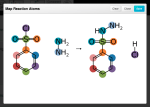
 To continue on in the series of reaction-based cheminformatics on the MolSync website, the final missing search piece has now been implemented: reaction similarity. This works in a manner that is analogous to the transform feature, insofar as if you just draw one side of the reaction, or draw both sides but provide no atom-to-atom mapping information, the search behaviour just uses the molecules as-is. If you do provide atom mapping, though, the search gets a whole lot more specific. Continue reading
chemspider
MolSync overhaul: back to the web, now with reactions too
 Things have been a bit quiet in these parts lately, but not due to inactivity: far from it. In between working on some exciting projects with Collaborative Drug Discovery, I have been quietly making rapid progress on several important key technologies. These include the OS X Molecular DataSheet (XMDS), presiding over a growing collection of reaction data, and most recently a complete overhaul of the MolSync website, which provides cheminformatics support services of various kinds. Continue reading
Experiment editing in XMDS: dogfooding time
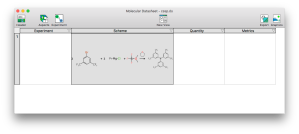 Progress is coming along nicely with the Experiment aspect editor for XMDS, which is essentially the desktop platform playing catchup with mobile and matching the functionality of the Green Lab Notebook (GLN) app. There is now an editor in place for the overall reaction scheme, which allows the components of a multistep reaction to be composed. This is a development milestone because it means that it’s time to switch to using it for data entry to find out what needs to be added or fixed most urgently, rather than implementing essential features that are obviously missing (cf. dogfooding = eating one’s own dogfood, in case anyone is unfamiliar with the term). Continue reading
ChemSpider Mobile 2.0 is out!
 After a good long while in development, version 2 of the ChemSpider Mobile app is now available on the iTunes AppStore. As one would expect from an increment of the major version number, the new release is a major overhaul, starting with an entirely new aesthetic which splits the difference between the iOS 7 mojo and the contemporary branding of the Royal Society of Chemistry, which owns and operates the ChemSpider service. Continue reading
Sneak preview: MMDS lookup of assays via OpenPHACTS
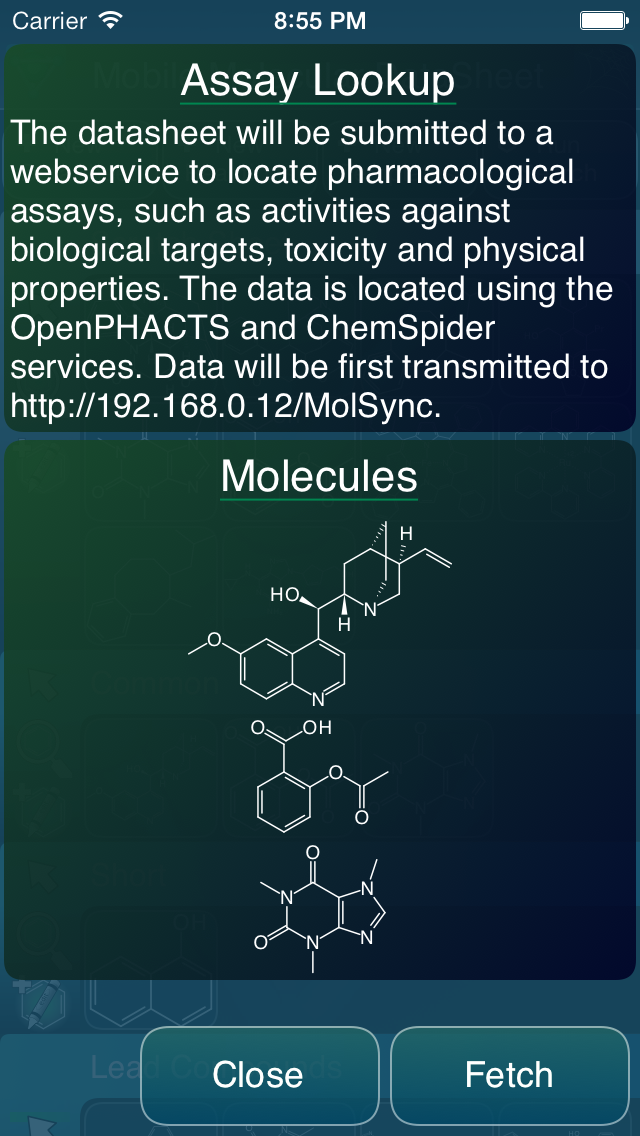 One of the features that’s slated for the next major version of the Mobile Molecular DataSheet (MMDS) is integration with OpenPHACTS pharmacological assay data. The feature is not quite ready yet, but the user interface is taking form, and is almost functional. The basic idea is that you start with a datasheet, with some number of molecules. Then, select the assay lookup feature, and a webservice intermediary cross references each of the molecular structures to the OpenPHACTS service, to pull out every available pharmacology datum, in a form that’s ready to insert into your data sheet as a new column. Looking up the data is quite easy, since OpenPHACTS is preassembled and has a very no-nonsense API, but reconciling a large number of datapoints into one or several columns of numbers is an interesting user interface workflow challenge. Continue reading
ChemSpider now integrated into searching with MMDS
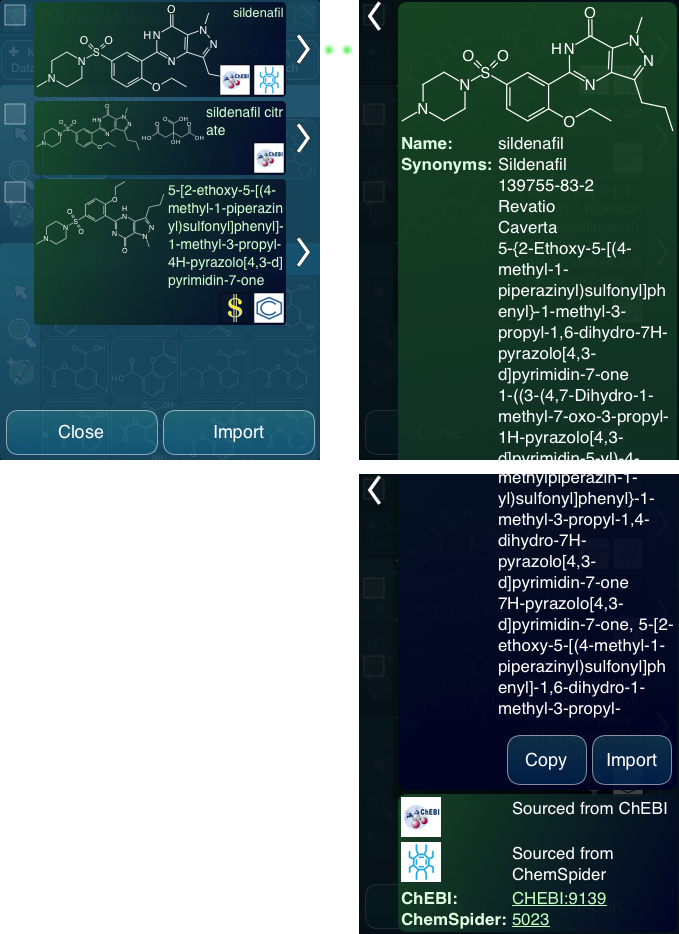 As of now, searches initiated from the Mobile Molecular DataSheet (MMDS), MolPrime+ or SAR Table include results obtained by searching the ChemSpider database, as well as ChEBI and PubChem. The results from these three public chemical database search engines are combined together into a composite result, which is ready for consumption by the mobile app. Continue reading
Green Solvents now sponsored by the Royal Society of Chemistry
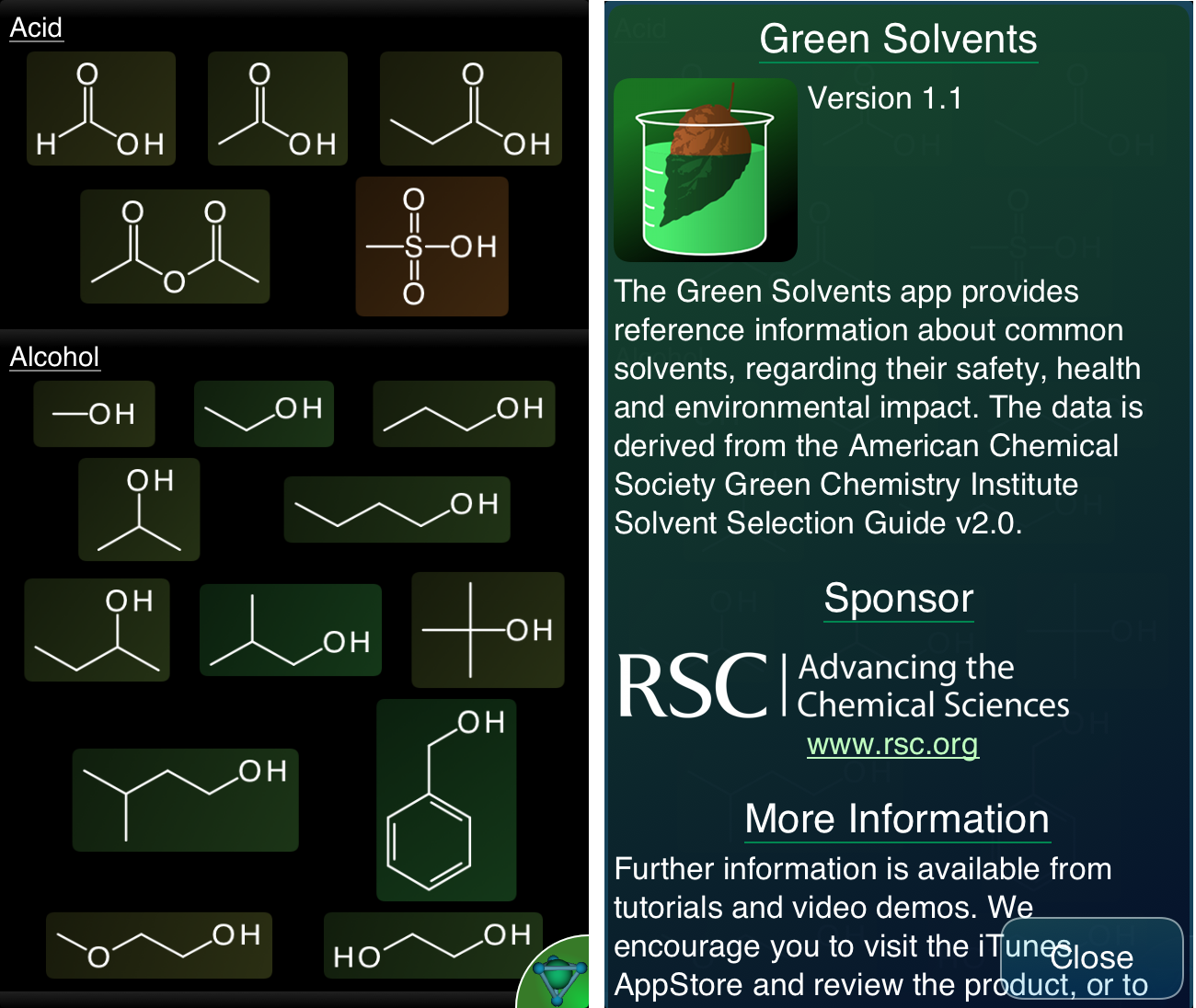 The latest version of Green Solvents (1.1) is now available on the AppStore. The first thing you’re likely to notice is that the banner advertising is gone. Take a closer look, and you’ll notice the acknowledgment that the app is now sponsored by the Royal Society of Chemistry. The Green Solvents app has been tied in with ChemSpider references from the outset. Given that the Royal Society of Chemistry owns ChemSpider, has a long standing interest in Green Chemistry, and an increasing role in the burgeoning ecosystem of mobile apps for chemistry, this is a natural progression.
If you have an iPhone, iPod or iPad, check out the Green Solvents app: it’s free, and it couldn’t be any simpler to use. And stay tuned for further announcements, there are more on the way!
ChemSpider Mobile app goes both ways: now includes Android
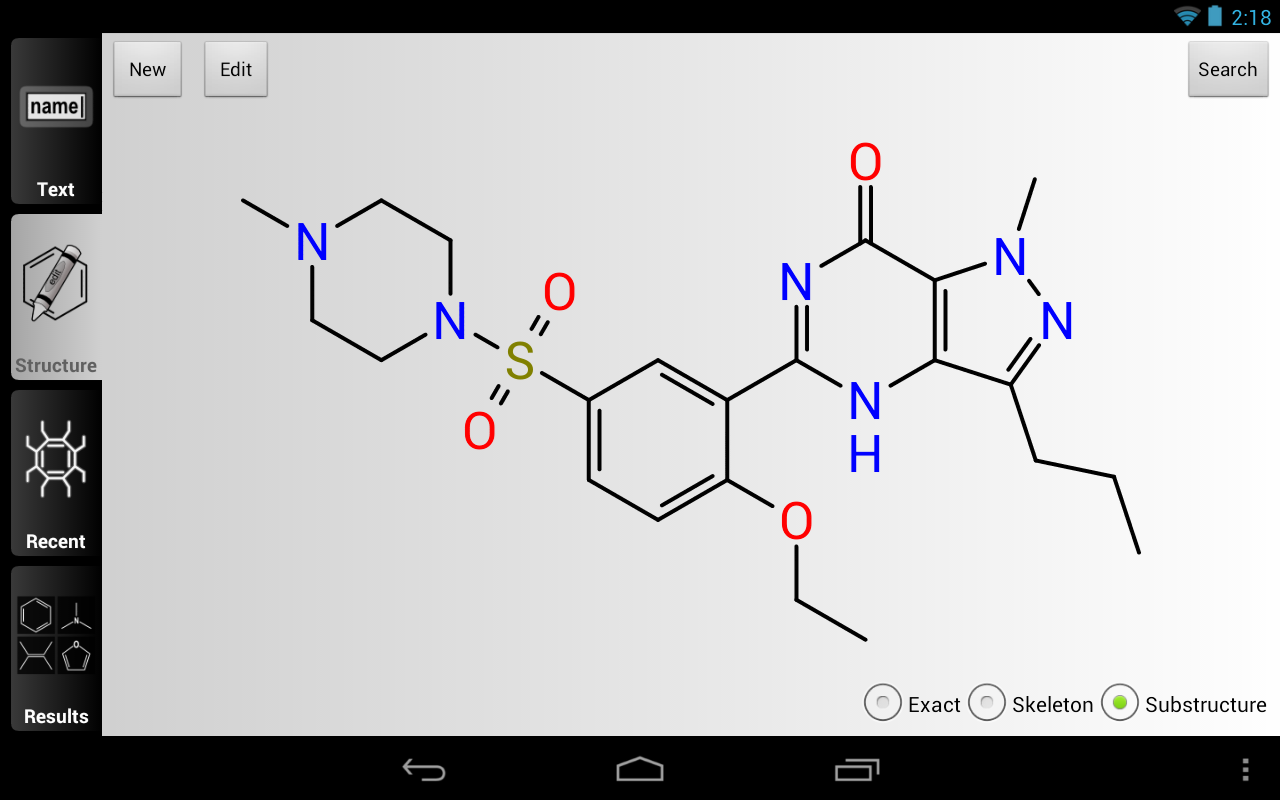 The ChemSpider Mobile app is now available for Android, and can be downloaded for free on Google Play. It should work well on just about any Android-based phone or tablet that has access to Google’s storefront, and it is built against a version of the operating system (2.3.3) that not only includes most official Android devices, but also can potentially be adapted to run on other platforms, such as Amazon Kindle of BlackBerry 10. Continue reading
CINF webinar ‘Practical cheminformatics workflows with mobile apps’ now available
Check out the webinar now on YouTube. The talk consists of me doing a brief introduction to mobile chemistry apps, then going through a fictional, yet realistic, workflow example that involves searching for new tuberculosis drug candidates. The workflow includes a tour through several of the apps that I’ve created, or had a hand in creating. But enough spoilers, watch the video whenever you’re ready.
Super Friday app update, and a positive Apple experience
Most of the apps from Molecular Materials Informatics have been updated recently, due to the iPad3: the retina-class screen has half again as many pixels as a 1080p monitor (i.e. a lot), and the performance profiles of some graphics operations have changed. A few things that were fast became slow, and so a few tweaks were necessary. A whole lot of apps got reviewed and passed in quick succession: MolPrime+, MMDS, MolSync, ODDT and ChemSpider Mobile. Others will follow soon.
 Cheminformatics 2.0