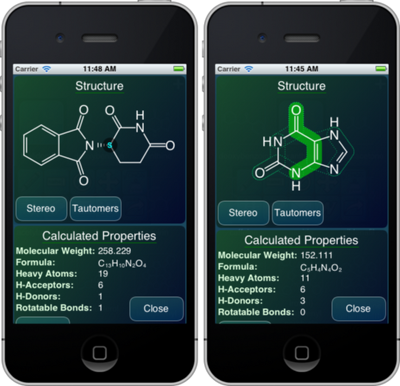
 The MolPrime+ app has recently been adding new property calculation features. It now provides for the calculation of CIP stereochemistry labels and tautomer interconversions. Continue reading
cheminformatics
ODDT entering beta phase
The Open Drug Discovery Teams app (ODDT) has now been promoted to “beta” status (version 0.9.0) and submitted to the iTunes AppStore. If all goes well, within a fortnight anyone with an iPhone, iPod or iPad will be able to download the app for free, and try it out.
Even though the app is now in the process of being made available to the public, it is still a very early product, and the list of features to be added is long. We fully expect community feedback to have a considerable impact on how the project evolves.
ACS Talk: Building a mobile app ecosystem for chemistry collaboration
The slides for my recent presentation at the American Chemical Society meeting in San Diego (Spring 2012):
The slides cover a whirlwind tour through some of the apps produced by Molecular Materials Informatics, showing how they can be used together in a realistic chemical information workflow.
Mobile sketching: convert group to formula
Version 1.3.9 of the Mobile Molecular DataSheet (MMDS) for iOS has just come out, and it brings a nice improvement to molecule sketching: there is now an action button for converting a selected terminal group into an inline abbreviation, which is automatically set to its molecular formula:

The action subsumes the selected atoms into an inline abbreviation, so the original chemical structure is preserved. Representing formulae within a molecular structure is a very common way to condense representations of a structure, and using this method ensures that the structural nuances are not lost, i.e. the abbreviation can be restored by re-expanding it, and the overall molecular formula for the structure is still calculated correctly. Continue reading
ODDT: web page crawling in search of images
The latest alpha testing version of ODDT (Open Drug Discovery Teams) has been enhanced to be considerably more graphical. The back-end server operates by regularly polling for predefined Twitter hashtags, and assimilating new content into its own stream. For several revisions, links that contain chemical data (structures, reactions, datasheets) have been recognised explicitly, and handled by the app, allowing the content to be previewed and used in conjunction with other apps. Now images are handled as well: tweets with links that go directly to images are recognised as such, and links that lead to HTML pages are downloaded and crawled, in search of references to embedded images.
ODDT snapshot: twitter mugshots
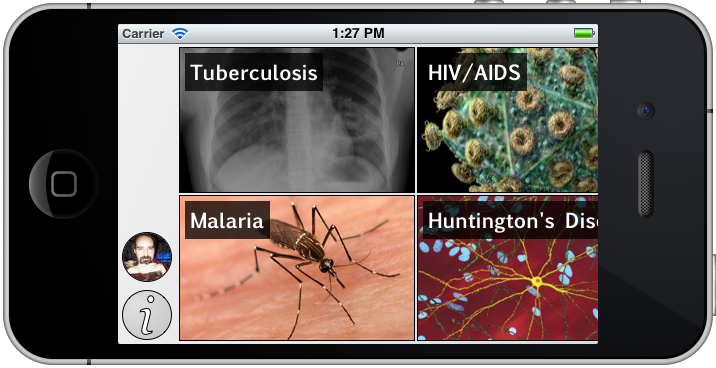 The alpha stage prototype of the Open Drug Discovery Teams (ODDT) app proceeds. Since the last snapshot, a couple of extra buttons have been added to the main page, as can be seen by the graphic on the right (which also demonstrates that this is not just an iPad app, it is designed to work on iPhones/iPods as well). Continue reading
Mobile chemistry product roadmap
With the American Chemical Society San Diego meeting coming up next month, and a year’s worth of new products and new features to cram into a 30 minute talk, now is as good a time as any to review some of the upandcoming developments that are on the roadmap for Molecular Materials Informatics.
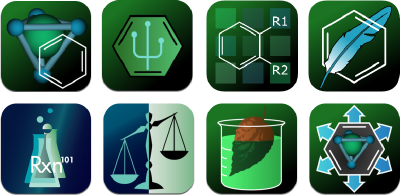
These projects include some of the improvements that are intended for the near future. This planning ahead is just a snapshot in time, so entries will be added, deleted or reprioritised as necessary. Continue reading
More about ODDT
The previous post mentioned a new project in the works, called ODDT (short for Open Drug Discovery Teams, or anachronistically “Oddity”).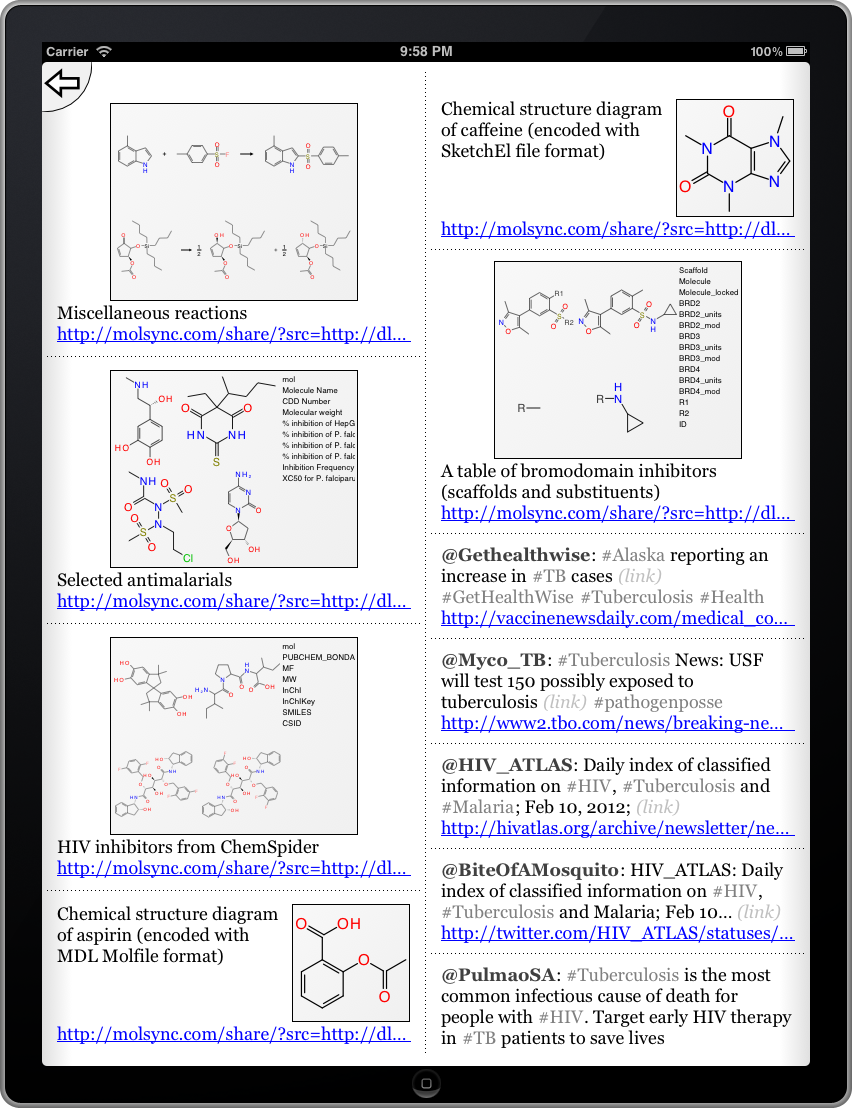 This is a project that was not even an idea 3 weeks ago when Sean Ekins started writing out some notes during a conference. In the interim time we got together and drew out a roadmap, built an app, put together some server infrastructure, and pitched the app in front of the Pistoia Dragon’s Den.
The project is currently immature, raw, and very far from finished – but this post covers some of the basics of what it is, and what it will grow into. Continue reading
Working backwards: content creation, communication, consumption
The app ecosystem for mobile devices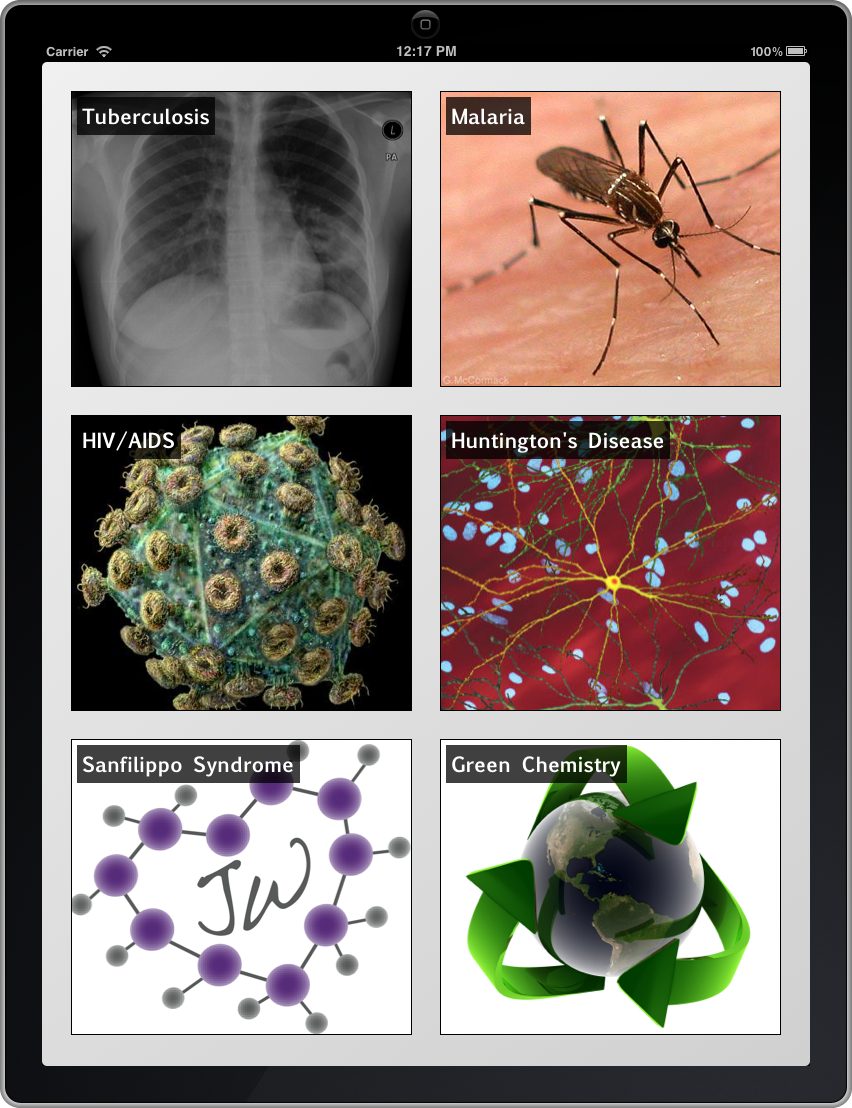 has, for good reasons, been primarily oriented toward consumption of media content. This is particularly true of Apple’s touchscreen-only iPhones and iPads: these elegant portable computers make for a delightful way to peruse content, as evidenced by wildly popular apps like The Elements or Flipboard. Facile access to internet connectivity makes communication-oriented apps very effective, as witnessed by the number of mobile users of clients for social networks like Twitter and Facebook. Content creation, on the other hand, presents a significant challenge. Creating new data of any kind suffers from the inherent clumsiness of the finger-on-screen user interface paradigm, which makes something as simple as writing an email message somewhat of an inconvenience akin to learning how to touchtype all over again. Continue reading
The unassailable value of cheminformatics
The overall field of computational chemistry/chemical information/computer assisted drug design can be divided up and categorised in any number of different ways, but one partitioning that seems particularly helpful to me is:
- using software to attempt to do real science
- using software as a glorified book-keeping toolset
The first category – real science – includes various kinds of efforts to model real systems, identify leads, predict properties, calculate binding affinity, etc. The second category – book-keeping – includes graphical presentation, data warehousing and relatively mundane operations, such as searching, performed on a large scale. Continue reading
 Cheminformatics 2.0