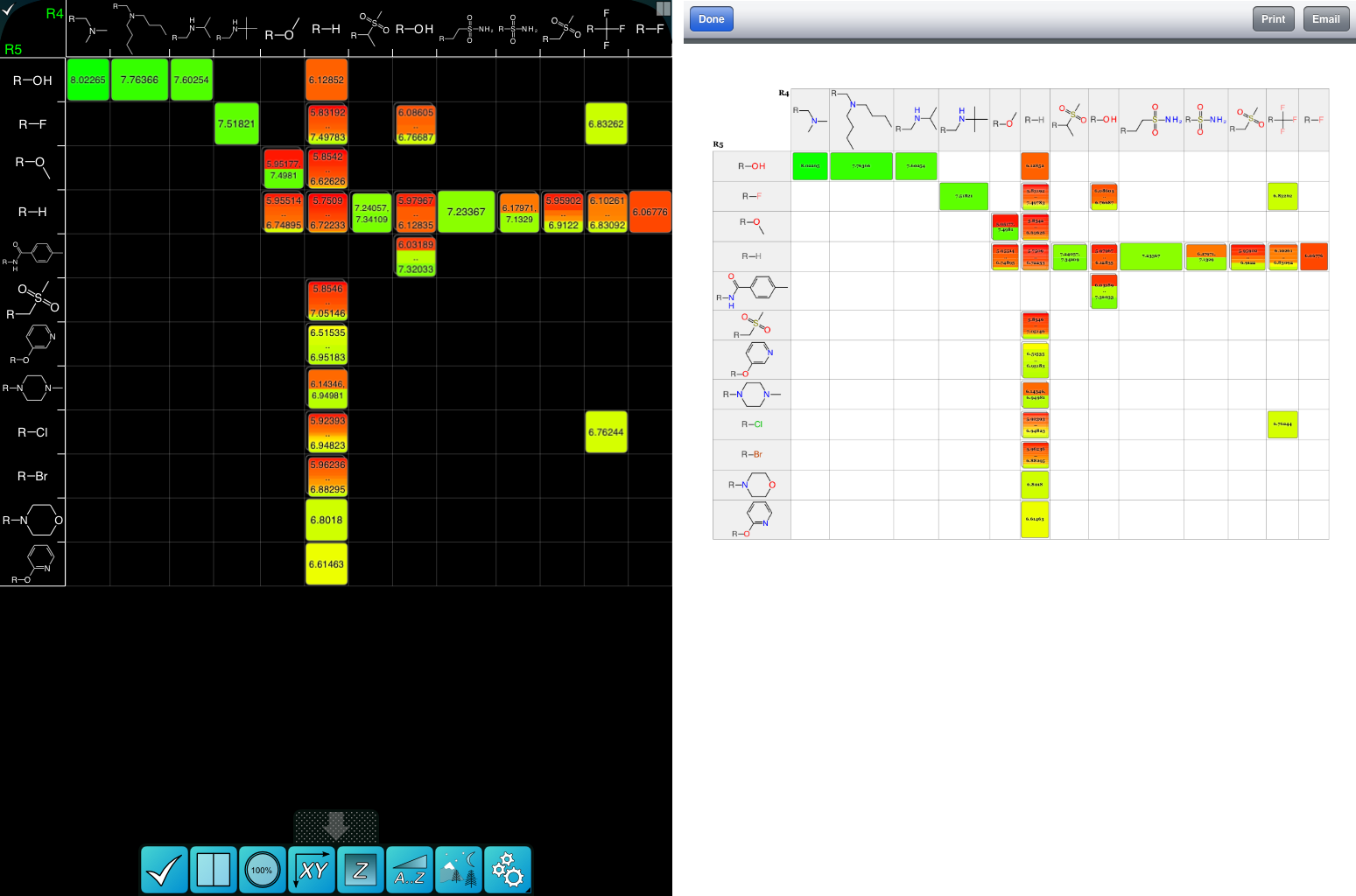
 In an upcoming version of the SAR Table app, it will be possible to export the matrix view, as shown on the device, as a printable PDF file. The document can be printed directly from your iThing, or sent as an email attachment. Continue reading
cheminformatics
SAR Table prediction of empty matrix cells
 The next version of the SAR Table app is going to be accompanied by quite a few enhancements, one of them being the ability to use a previously built model to come up with predictions for empty cells in the matrix view. Continue reading
SAR Table: colour coded activities for lookups
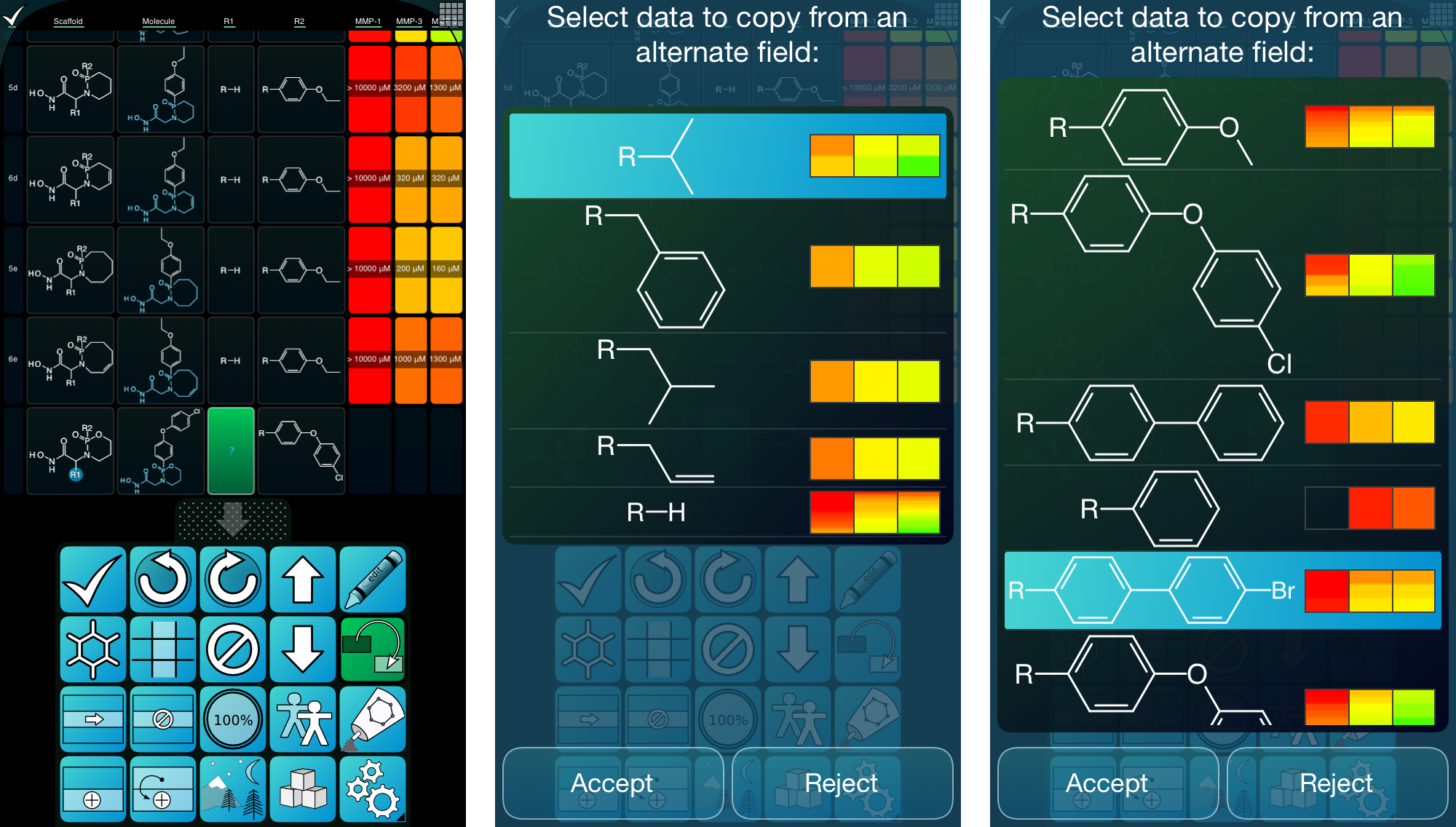 The SAR Table app is undergoing a number of enhancements to make it more suited for planning new compounds based on existing structure-activity relationships. A lot of this has to do with property prediction, model building and scaffold searching of public databases. One of the features slated for the next update is a bit more down to earth: presenting a indication of activities when selecting scaffolds or substituents for reuse. Continue reading
The Pistoia App Catalog, and why we need it
 The Pistoia Alliance‘s App Strategy, which is soon going to open the doors on its first offering (phase 1), is initially intended to solve one of the gnawing problems faced by vendors of mobile apps that are not targeted at the entire consumer internet market: the near impossibility of contacting users.
Not that people should be spammed for the rest of their lives just because they downloaded an app, but the mechanisms that the public appstores provide for users to safely initiate a dialog are essentially limited to the comments. Continue reading
More model building: log P, melting point, and beyond
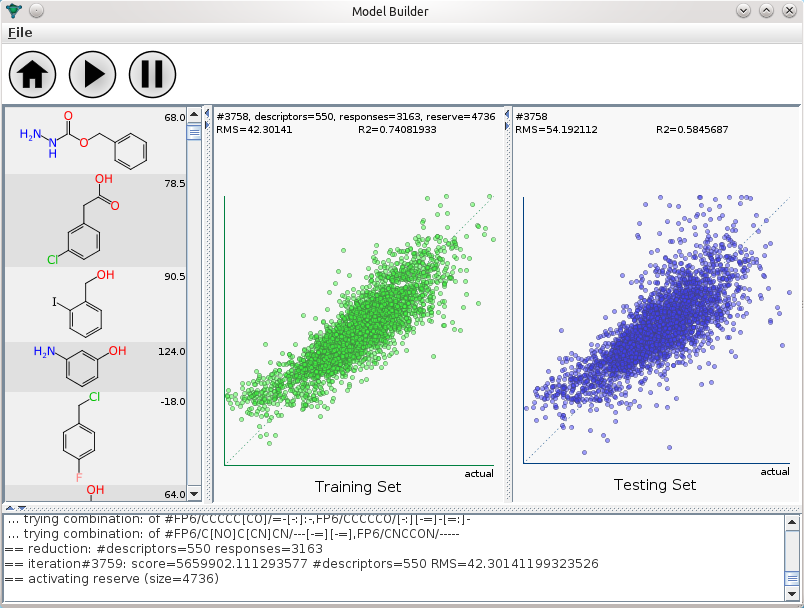 To enhance the capabilities of apps, one of the main side projects that I’ve been working on in between other major distractions is a framework for building and applying models that correlate chemical structure with physical properties or biological activities. The ability to apply a model, and even better to build one then make use of it, has been introduced to the SAR Table app. The underlying machinery for that particular feature is not very friendly toward larger datasets (where large means more than about a hundred compounds in this context), but there has been considerable progress in that regard, which happened to involve creating a more conventional desktop user interface, shown above. Continue reading
Scaffold searching using the SAR Table app
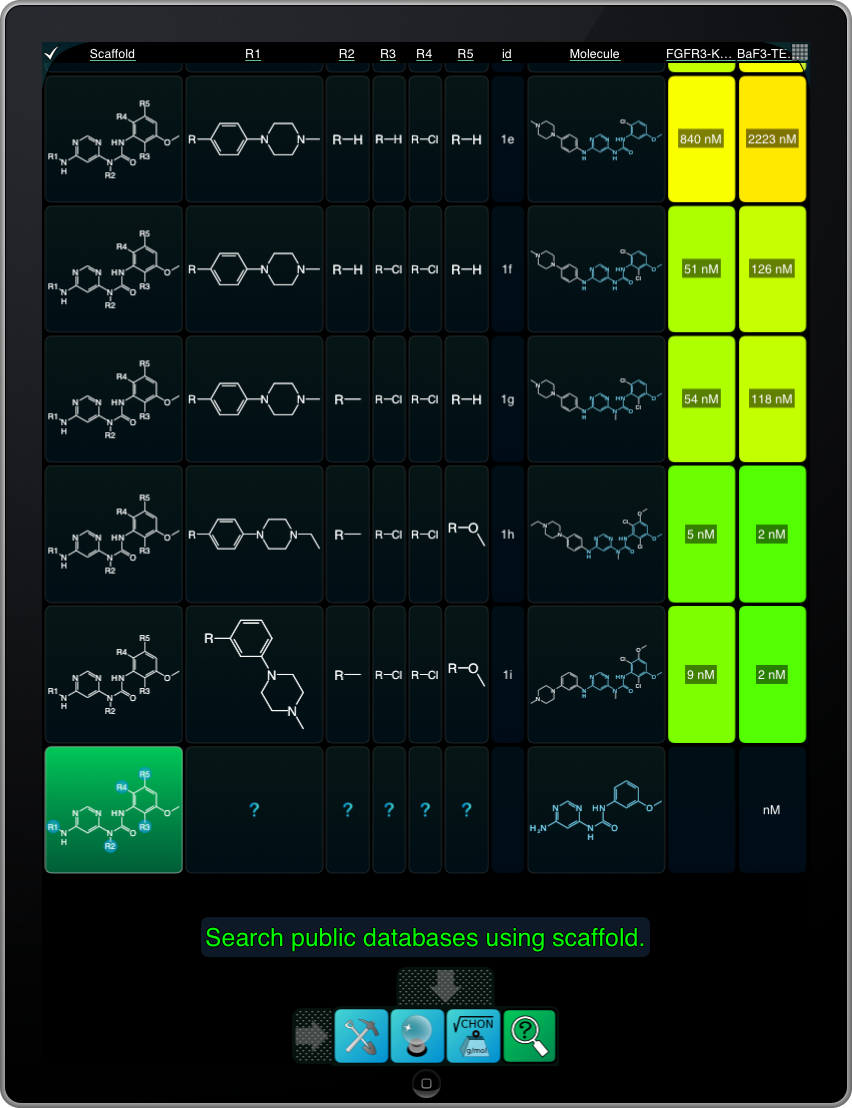 The third app to implement a front end for the new general search capabilities is SAR Table. This one works a bit differently, because instead of offering the standard name/structure/substructure/similarity quartet, it offers a fifth type: searching by scaffold template. Continue reading
SAR Table adding template creation from the matrix [view]
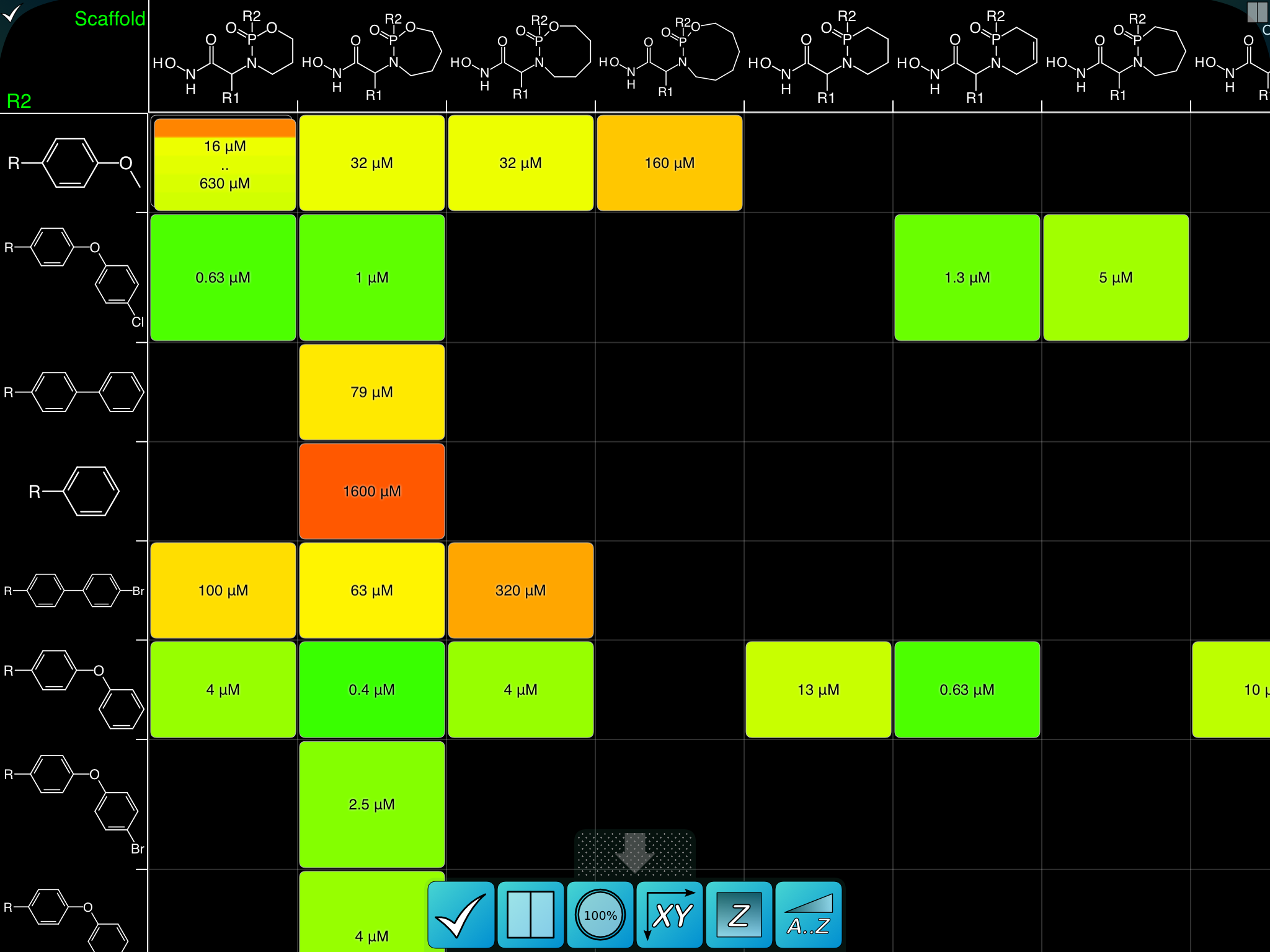 The SAR Table app is going through some major improvements at the moment. Earlier this year, the matrix view feature was introduced, which allows two properties (e.g. scaffold, R-groups) to be plotted against each other in a grid, with one or more properties represented with colour coding for easy recognition, such as shown on the top right. Continue reading
Structure-property calculation with MMDS
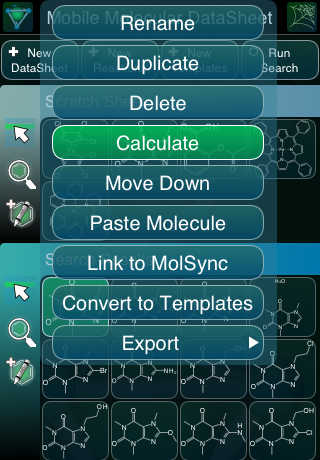 Version 1.4.1 of the Mobile Molecular DataSheet (MMDS) has just been submitted to the iTunes AppStore, and its notable new feature is the ability to select a datasheet and calculate structure-based properties. A new column is created for each selected property, and the calculation feature is applied to each row. The available properties currently include molecular weight/formula, log P, molar refractivity and topological polar surface area. The functionality is provided by the molsync.com webservice. Continue reading
Search integration added to MolPrime+
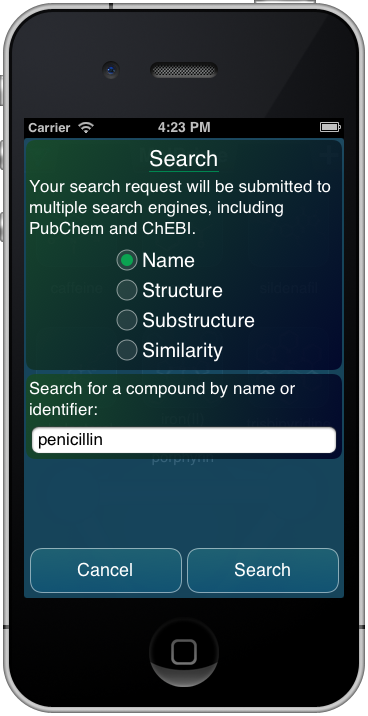 Subsequent to the addition of integrated public database searching to MMDS, the feature has now been added to MolPrime+ for iOS as well. The latest version, 1.1, has been submitted to the AppStore and should be available soon. As soon as it is approved, it will be possible to easily search the PubChem and ChEBI databases, by name or structure, and use the results within the app. Continue reading
SketchEl gets an update: MDL MOL extensions for zero-order bonds
 The open source project SketchEl, hosted by SourceForge, is a cheminformatics-focused structure editor that I wrote back at the dawn of time (also known as the year 2005). The latest version, 1.56, adds in MDL MOL extensions that allow this popular legacy format to be used for reading and writing structures that use zero-order bonds, and non-computable virtual hydrogens, as described in J. Chem. Inf. Model., 51, 3149-3157 (2011). Continue reading
 Cheminformatics 2.0