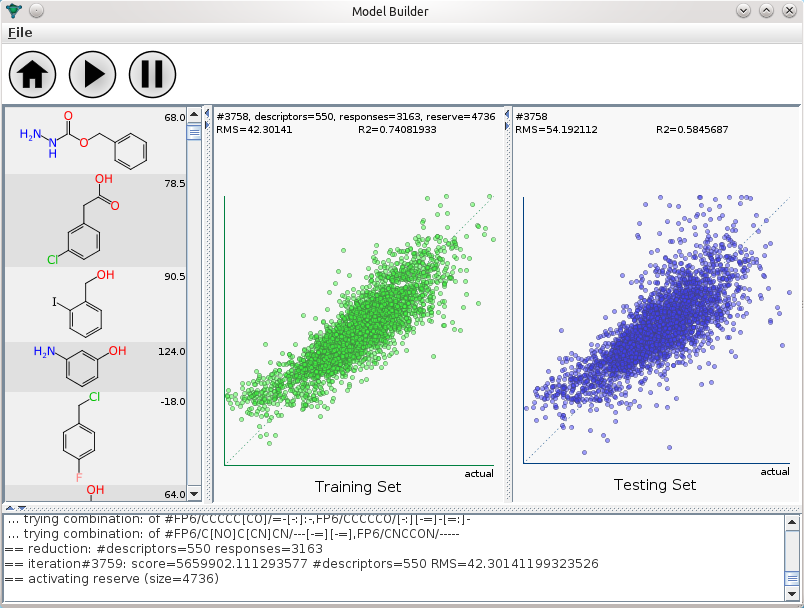
 To enhance the capabilities of apps, one of the main side projects that I’ve been working on in between other major distractions is a framework for building and applying models that correlate chemical structure with physical properties or biological activities. The ability to apply a model, and even better to build one then make use of it, has been introduced to the SAR Table app. The underlying machinery for that particular feature is not very friendly toward larger datasets (where large means more than about a hundred compounds in this context), but there has been considerable progress in that regard, which happened to involve creating a more conventional desktop user interface, shown above. Continue reading
cloud-servers
Scaffold searching using the SAR Table app
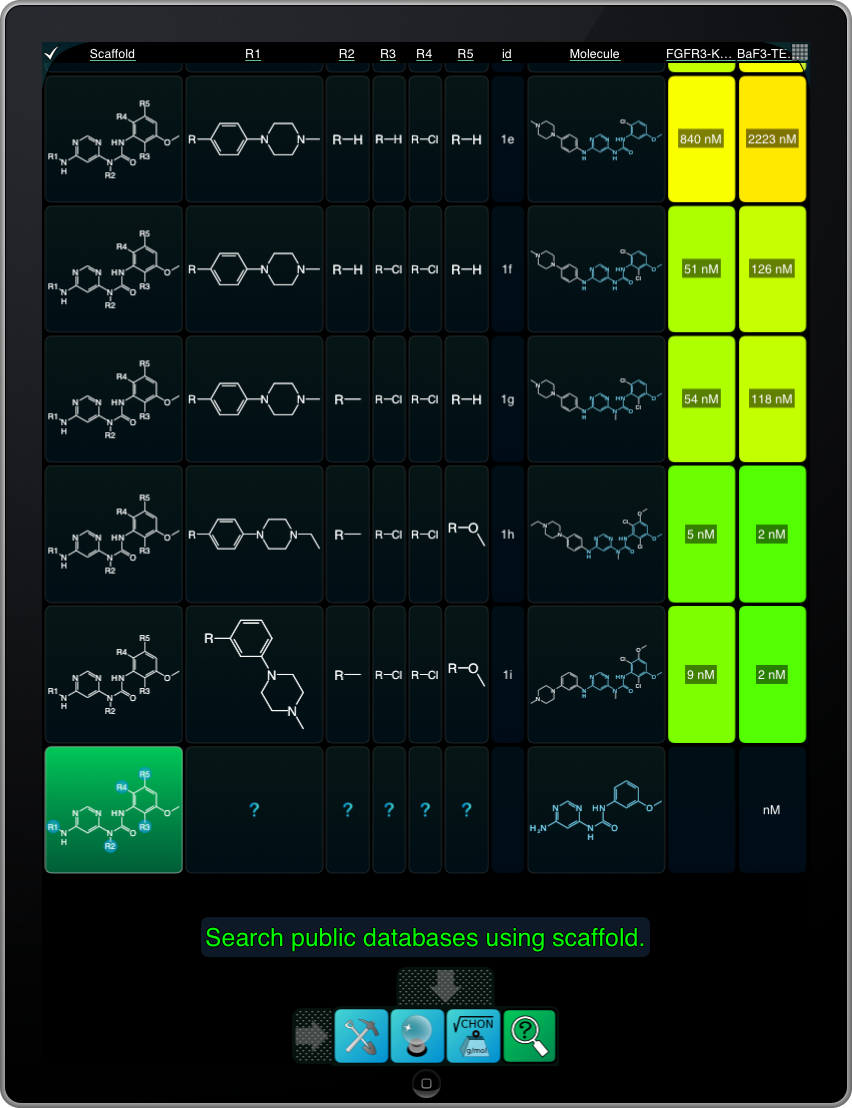 The third app to implement a front end for the new general search capabilities is SAR Table. This one works a bit differently, because instead of offering the standard name/structure/substructure/similarity quartet, it offers a fifth type: searching by scaffold template. Continue reading
Structure-property calculation with MMDS
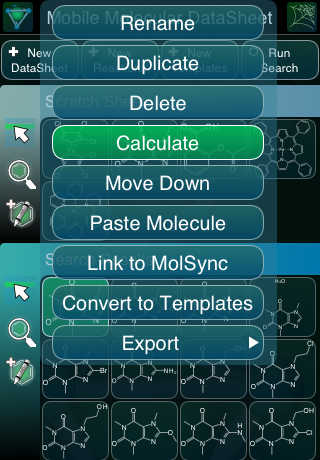 Version 1.4.1 of the Mobile Molecular DataSheet (MMDS) has just been submitted to the iTunes AppStore, and its notable new feature is the ability to select a datasheet and calculate structure-based properties. A new column is created for each selected property, and the calculation feature is applied to each row. The available properties currently include molecular weight/formula, log P, molar refractivity and topological polar surface area. The functionality is provided by the molsync.com webservice. Continue reading
Search integration added to MolPrime+
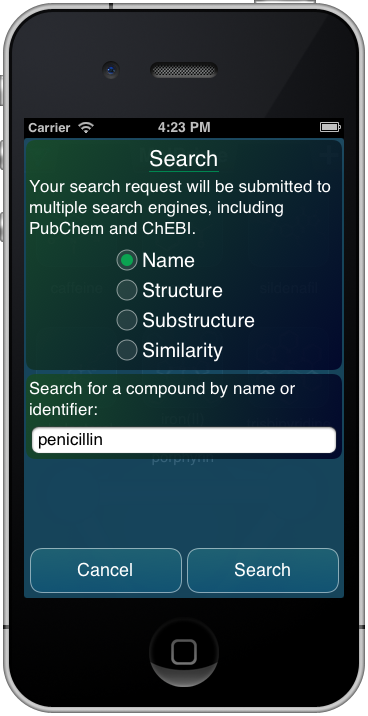 Subsequent to the addition of integrated public database searching to MMDS, the feature has now been added to MolPrime+ for iOS as well. The latest version, 1.1, has been submitted to the AppStore and should be available soon. As soon as it is approved, it will be possible to easily search the PubChem and ChEBI databases, by name or structure, and use the results within the app. Continue reading
Feature preview: integrated searching within apps
 Currently there’s a new feature in the works that’s going to make searching for compounds more convenient. The internal name is “MetaSearch”, because it’s a webservice that layers itself on top of existing search engines, and pulls together the best content from each of them and does a variety of additional processing.
As can be seen from the collage to the right, the new feature will first be made available in the Mobile Molecular DataSheet app for iOS, and will appear in the version 1.4 release. Continue reading
Yield101 gets an overhaul: sharing schemes on the web
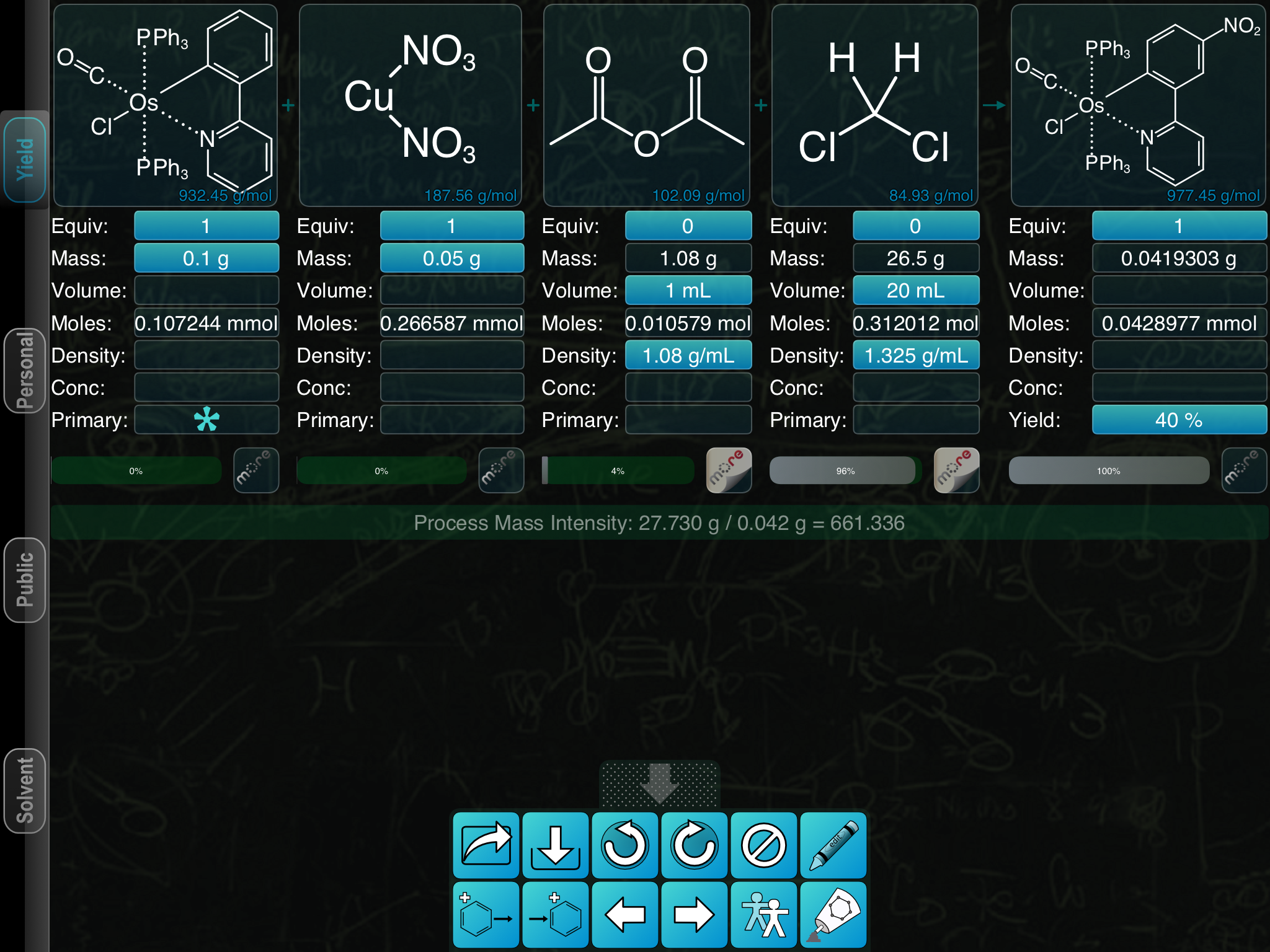 It’s been awhile, but we’ve finally pushed out new versions of Reaction101 and Yield101, both now upgraded to version 1.1. Apart from a general update with all the improvements/bug fixes in the underlying libraries, the major additions are the ability to share reaction schemes on the web, and the choice of sketchers to use. Continue reading
Model building, genetic algorithms and the SAR Table app
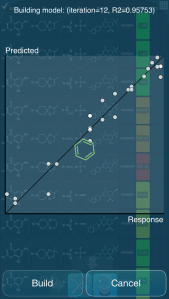 Recent efforts on the subject of model building are getting close to fruition. As mentioned a few months back when I presented a CINF webinar, the SAR Table app has a not-yet-released feature which allows the current set of structures and their activities (“responses”) to be packed off to a webservice, which proceeds to construct a model based on structural features, then predicts values for any structures that don’t have values for that particular property. Continue reading
Pistoia App Strategy webinar coming up
 Next Friday (9th November, 11am EST), the Pistoia Alliance will be hosting a webinar describing their App Strategy. Yours truly will be the presenter. The webinar will describe the three planned phases of the Pistoia Alliance App Strategy. Continue reading
MolPrime for Android and sharing on the web
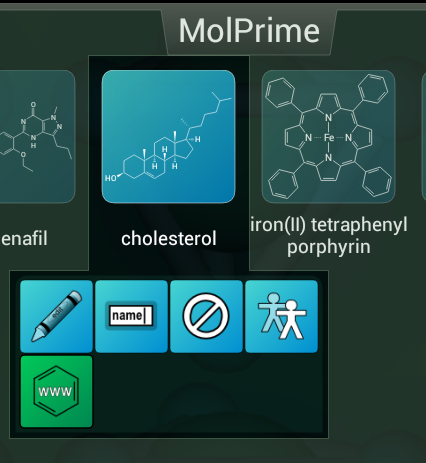 The most recent version version of MolPrime for Android v1.0.3 adds the ability to share structures on the open web. The Android port of MolPrime was originally released as a technology proof of concept, a work in progress to show that the core functionality of chemical structure drawing has been successfully ported to the other popular mobile platform. Now with the ability to share structures, the free app now starts to take on the role of a useful workflow productivity tool. Continue reading
CINF webinar ‘Practical cheminformatics workflows with mobile apps’ now available
Check out the webinar now on YouTube. The talk consists of me doing a brief introduction to mobile chemistry apps, then going through a fictional, yet realistic, workflow example that involves searching for new tuberculosis drug candidates. The workflow includes a tour through several of the apps that I’ve created, or had a hand in creating. But enough spoilers, watch the video whenever you’re ready.
 Cheminformatics 2.0