And also happy 2024 to everyone, I haven’t been writing much lately on account of juggling work and family life. The topic of this post is two aesthetic molecule drawing improvements that could be described as highly unfavourable from the point of view of the effort:reward ratio, but sometimes these things just bother you for long enough that they bubble up to the top of the to-do list.
The first one is split wedges:
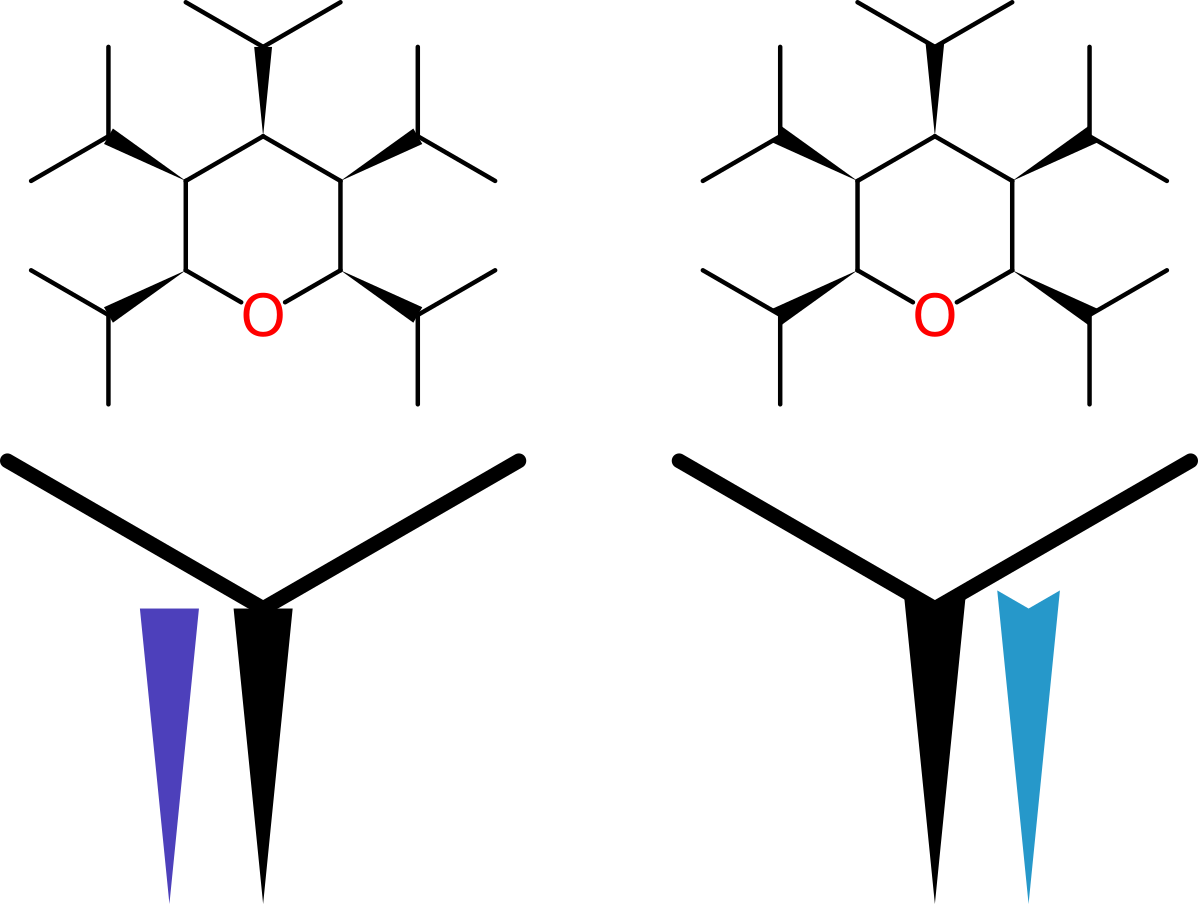
If you look carefully, the structure on the left has a wedge bond that terminates in an isosceles triangle, and has two single bonds emerging from it, which leaves a little gap. It’s not exactly the most annoying thing in the world, especially not at the resolution normally used for diagrams. But nonetheless wouldn’t it be a little bit nicer if it looked like the version on the right, where the wedge bond is shaped more like a chevron, and hugs the two bonds…
The second one is rings within not-quite-regular polygons. This is something that comes up quite often with arene rings for metal complexes, which are frequently drawn with a faux-3D aspect to them. When drawing a ring within an irregular polygon as a circle leads to ugliness, especially when the ligand is rotated as well as squished. The ideal solution would be an ellipse that is rotated and fitted to fill the polygon as best possible. This is something I wanted to do many years ago, but it turns out that there’s no elegant way to math it out, so the only solution was to roll up my sleeves and get dirty with a numerical method.
The results look quite good though:
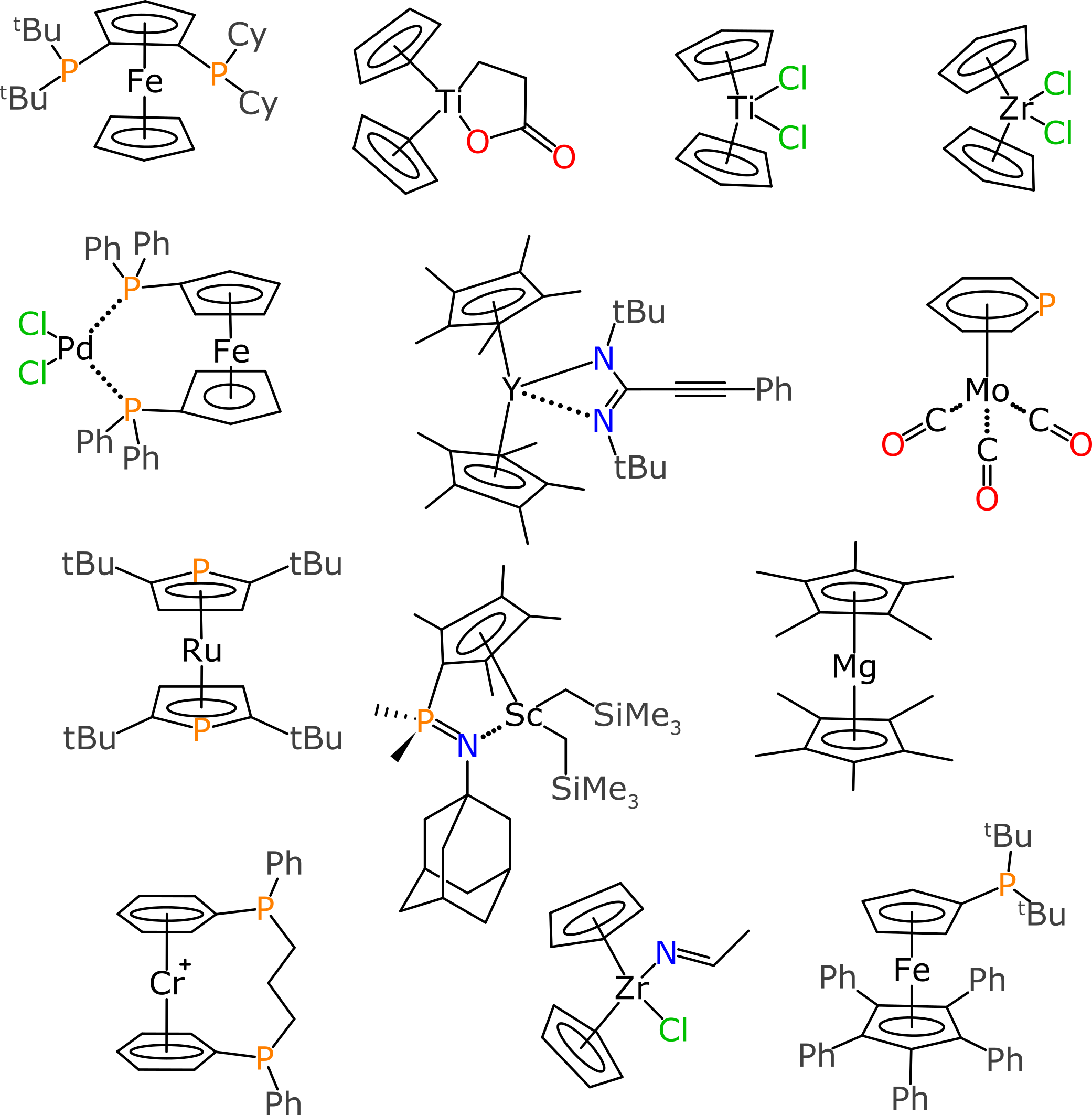
All the rings are computed on the fly from primitive representations.
The implementations can be found in the open source WebMolKit library.
 Cheminformatics 2.0