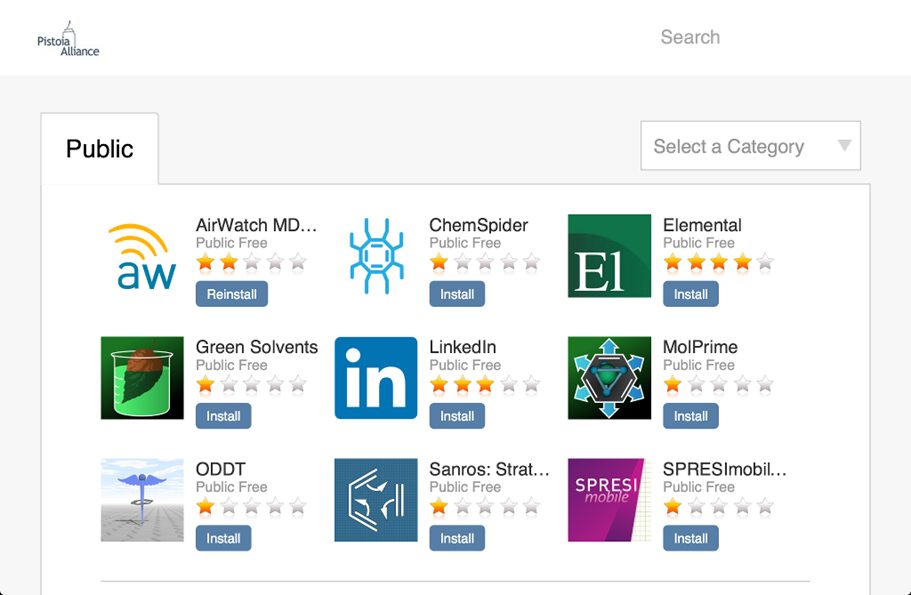
 Next Friday (9th November, 11am EST), the Pistoia Alliance will be hosting a webinar describing their App Strategy. Yours truly will be the presenter. The webinar will describe the three planned phases of the Pistoia Alliance App Strategy. Continue reading
MolPrime for Android and sharing on the web
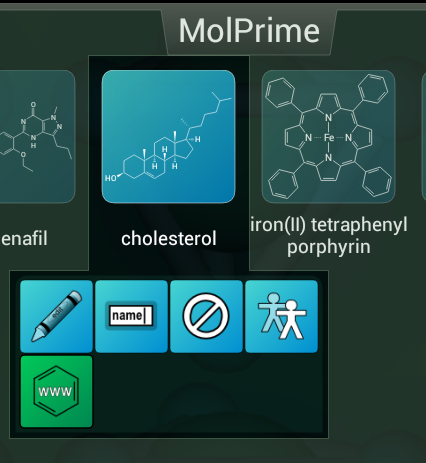 The most recent version version of MolPrime for Android v1.0.3 adds the ability to share structures on the open web. The Android port of MolPrime was originally released as a technology proof of concept, a work in progress to show that the core functionality of chemical structure drawing has been successfully ported to the other popular mobile platform. Now with the ability to share structures, the free app now starts to take on the role of a useful workflow productivity tool. Continue reading
TB Mobile: an app with reference data for tuberculosis drug research
 There is now another freely downloadable app in the iTunes AppStore called TB Mobile. If you have an iOS based device and any interest in research for new tuberculosis drugs, you should check it out. The app presents about 700 molecular structures, each of which has been screened against the tuberculosis mycobacterium (Mtb). Continue reading
CINF webinar ‘Practical cheminformatics workflows with mobile apps’ now available
Check out the webinar now on YouTube. The talk consists of me doing a brief introduction to mobile chemistry apps, then going through a fictional, yet realistic, workflow example that involves searching for new tuberculosis drug candidates. The workflow includes a tour through several of the apps that I’ve created, or had a hand in creating. But enough spoilers, watch the video whenever you’re ready.
CINF webinar: sneak preview
 Next week I will be presenting a webinar, organised by ACS CINF (American Chemical Society, Chemical Information division). The title is Practical cheminformatics workflows with mobile apps, so if you have any interest in finding out where the state of the art is at, put aside thirty minutes and tune in.
The graphic shown on the right is a snippet from the upcoming presentation. It’s taken from the latest version of the SAR Table app, which introduces the ability to interface with a webservice that builds a structure-activity model based on available activity data, and predicts the missing values, which are shown as colour-coded half-squares. It’s still experimental, but it will be making an appearance in the workflow example next week.
SPRESImobile 2.0 now available: full reaction searching
 The SPRESImobile app provides access to InfoChem‘s SPRESI database. It runs on Apple iOS devices (iPhones, iPods and iPads) and is free on the iTunes AppStore. The latest version extends the search capabilities to include searching by reaction: various types of exact, substructure and similarity searches can be performed. Furthermore, it is now possible for existing customers of SPRESI to provide their user credentials within the app, which unlocks the entirety of the database content, rather than the default curated ChemReact subset that is made available to all.
Molecular drawing tutorial for Android MolPrime
 As of soon, the MolPrime app for Android will come with a built-in beginner tutorial, which basically forces you to draw caffeine from scratch. You can watch a playthrough on YouTube, and if you have an Android device, you should be able to check it out for yourself soon. Continue reading
Multistep reaction rendering
 The Mobile Molecular DataSheet (MMDS) app has provided the ability to draw chemical reactions for some time now. Soon it will be possible to output them as multistep sequences, rather than discrete units. Continue reading
OSDD Malaria now aggregated by Open Drug Discovery Teams
 There’s more than one place to go for information about rare and neglected diseases, which is one of the main reasons we started building the Open Drug Discovery Teams project. An additional source has been added to the Malaria topic: @OSDDMalaria.
This is a Twitter feed compiled by Open Source Drug Discovery, which emits links to current and useful information about efforts to combat malaria. The kinds of information made available from this stream are ideally suited to what we’re trying to collect, and so the links are now polled and assimilated into our aggregated content.
Keep an eye on the Pistoia Alliance
Anyone who works with software for life sciences R&D has probably heard of the Pistoia Alliance, which counts among its members most of the large pharmaceutical companies. The organisation has lately been working on an app strategy, to help both vendors and customers design and build mobile apps and accompanying cloud-based services to make them more useful and more accessible to their customer base. And conversely making it easier for customers to help guide the way these products are built, in order to solve real problems. The strategy includes the creation of an enterprise app store, which provides an alternative way to deliver apps. Continue reading
 Cheminformatics 2.0