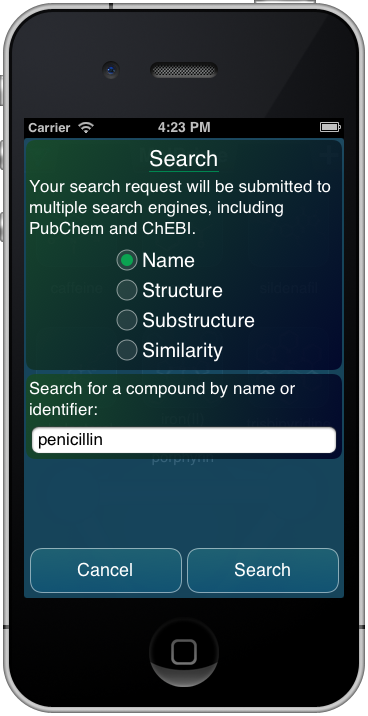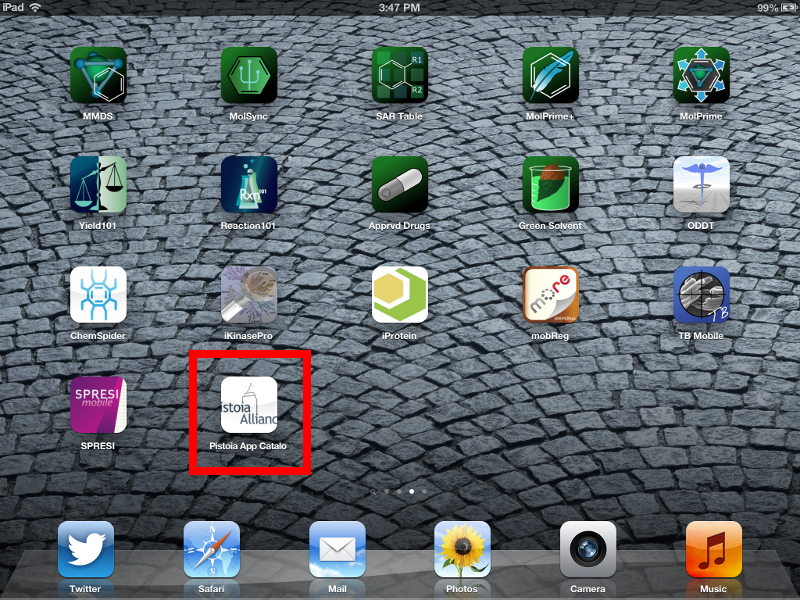
The Pistoia App Catalog, and why we need it

pistoia_app2The Pistoia Alliance‘s App Strategy, which is soon going to open the doors on its first offering (phase 1), is initially intended to solve one of the gnawing problems faced by vendors of mobile apps that are not targeted at the entire consumer internet market: the near impossibility of contacting users.

Not that people should be spammed for the rest of their lives just because they downloaded an app, but the mechanisms that the public appstores provide for users to safely initiate a dialog are essentially limited to the comments. Continue reading
More model building: log P, melting point, and beyond

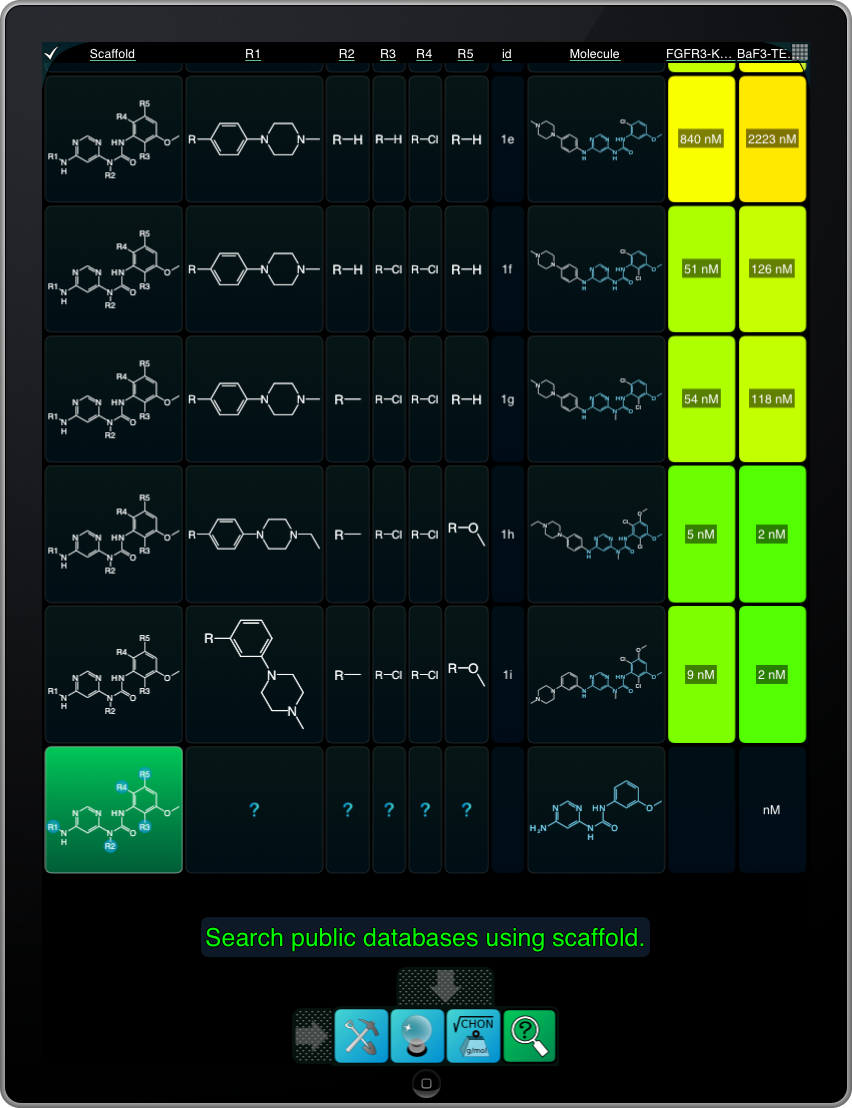
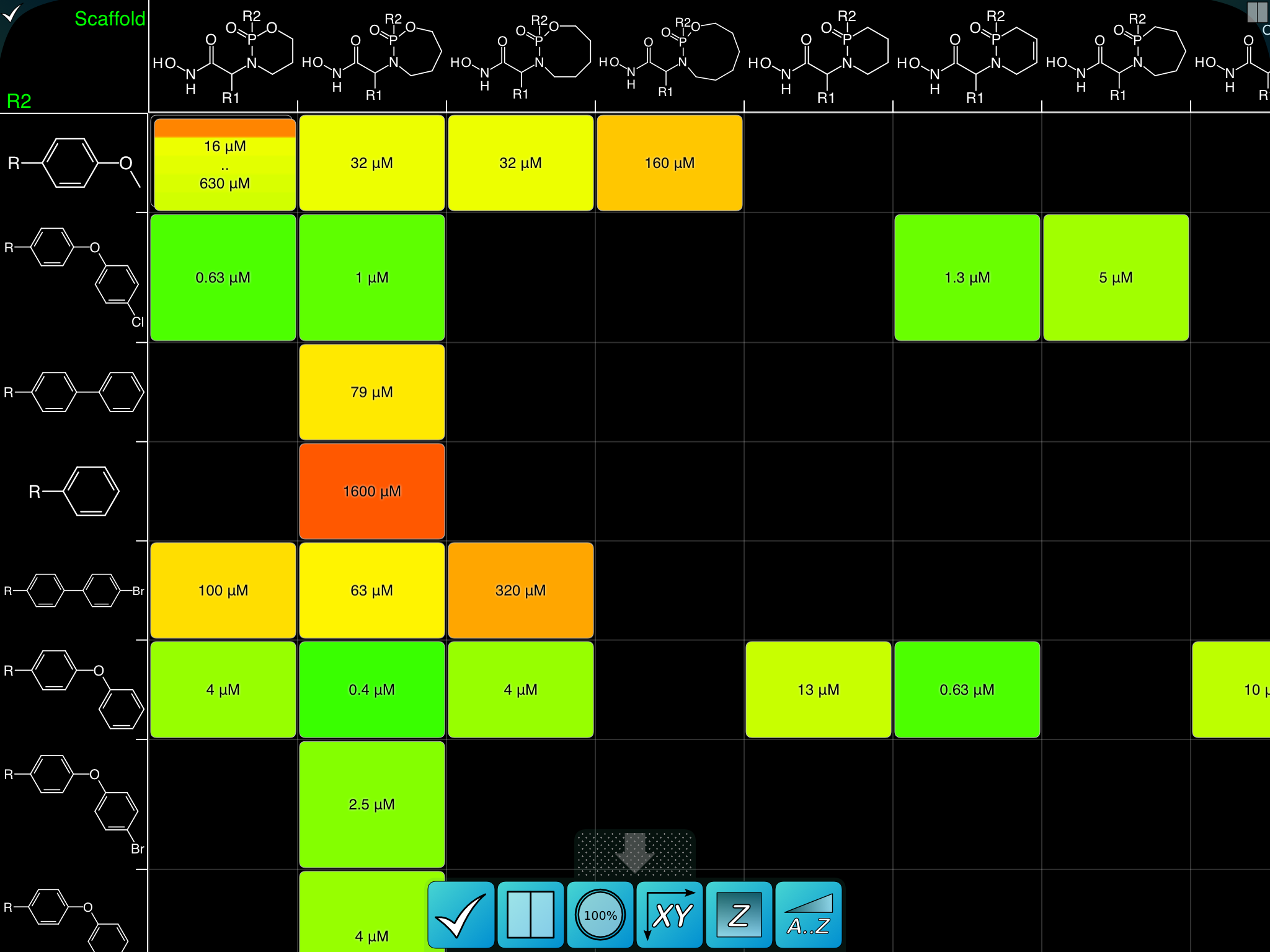
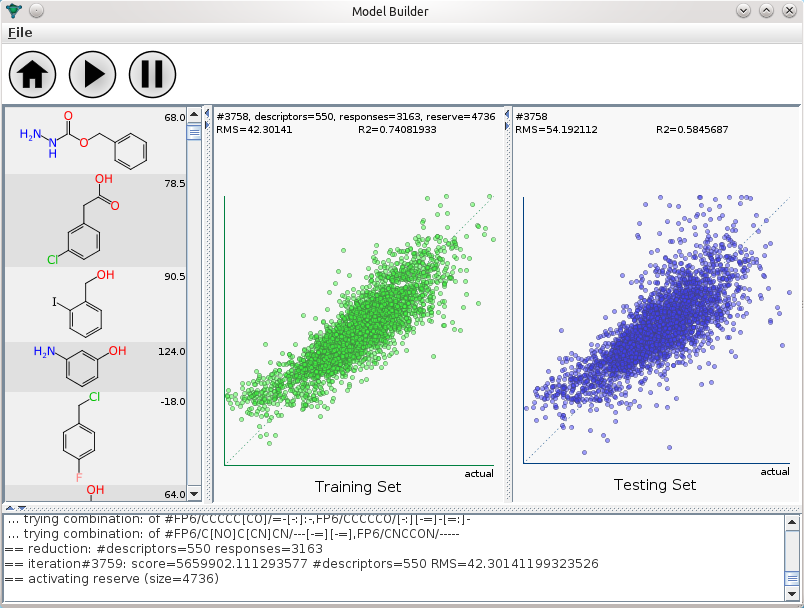
modelbuilderTo enhance the capabilities of apps, one of the main side projects that I’ve been working on in between other major distractions is a framework for building and applying models that correlate chemical structure with physical properties or biological activities. The ability to apply a model, and even better to build one then make use of it, has been introduced to the SAR Table app. The underlying machinery for that particular feature is not very friendly toward larger datasets (where large means more than about a hundred compounds in this context), but there has been considerable progress in that regard, which happened to involve creating a more conventional desktop user interface, shown above. Continue reading

Pistoia App Catalog: close to ready

pistoia_appcat

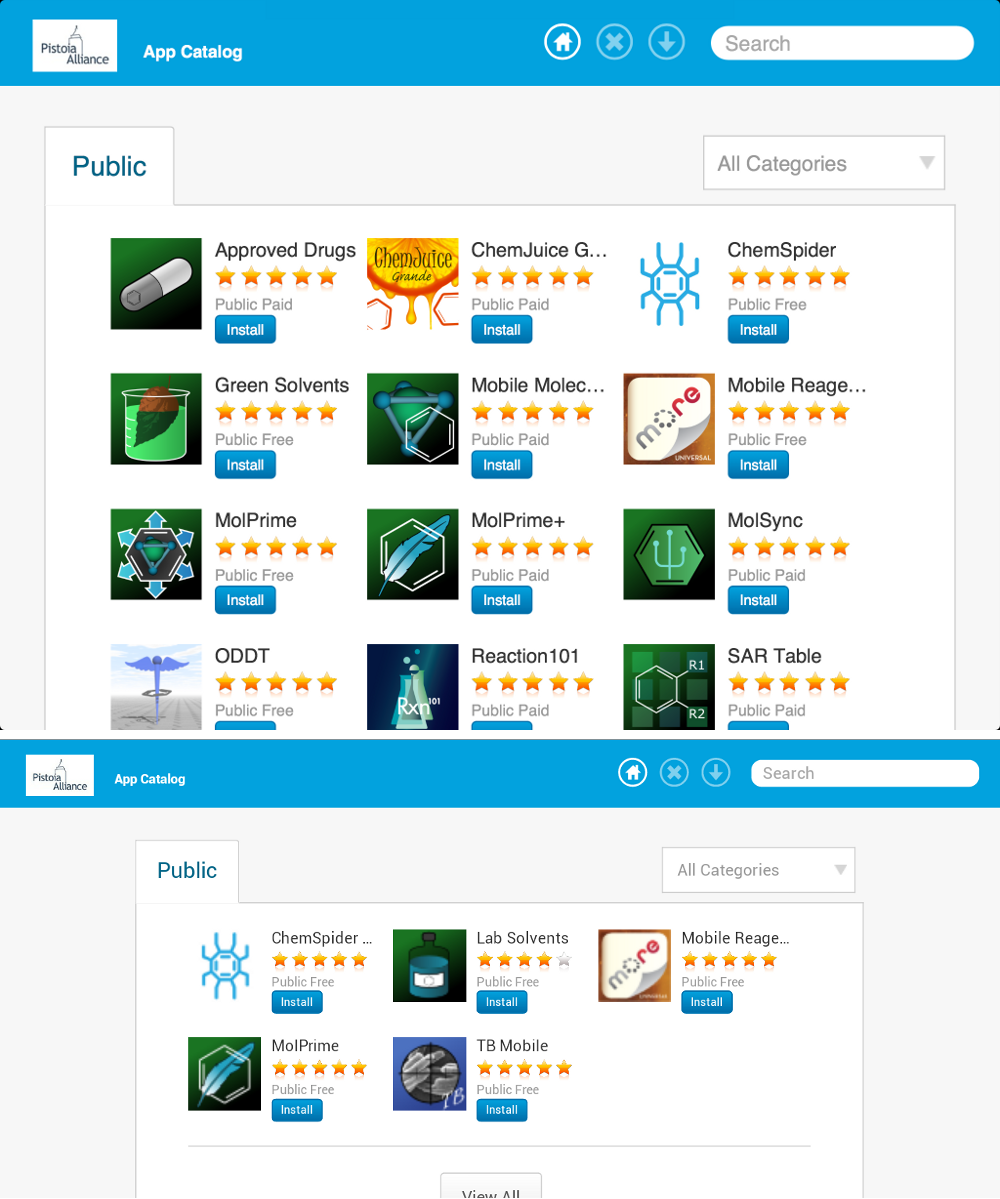
The Pistoia Alliance App Strategy is getting quite close to releasing its first public-facing result. Phase 1 of the strategy involves deploying a catalog, which serves as a community-focused collection of curated apps that are designed for use in life sciences R&D. The snapshot on the right shows two portals into the app catalog: the top part shows apps that are applicable to an iPad, and the bttom part for an Android-based device. Continue reading

Green Solvents now sponsored by the Royal Society of Chemistry

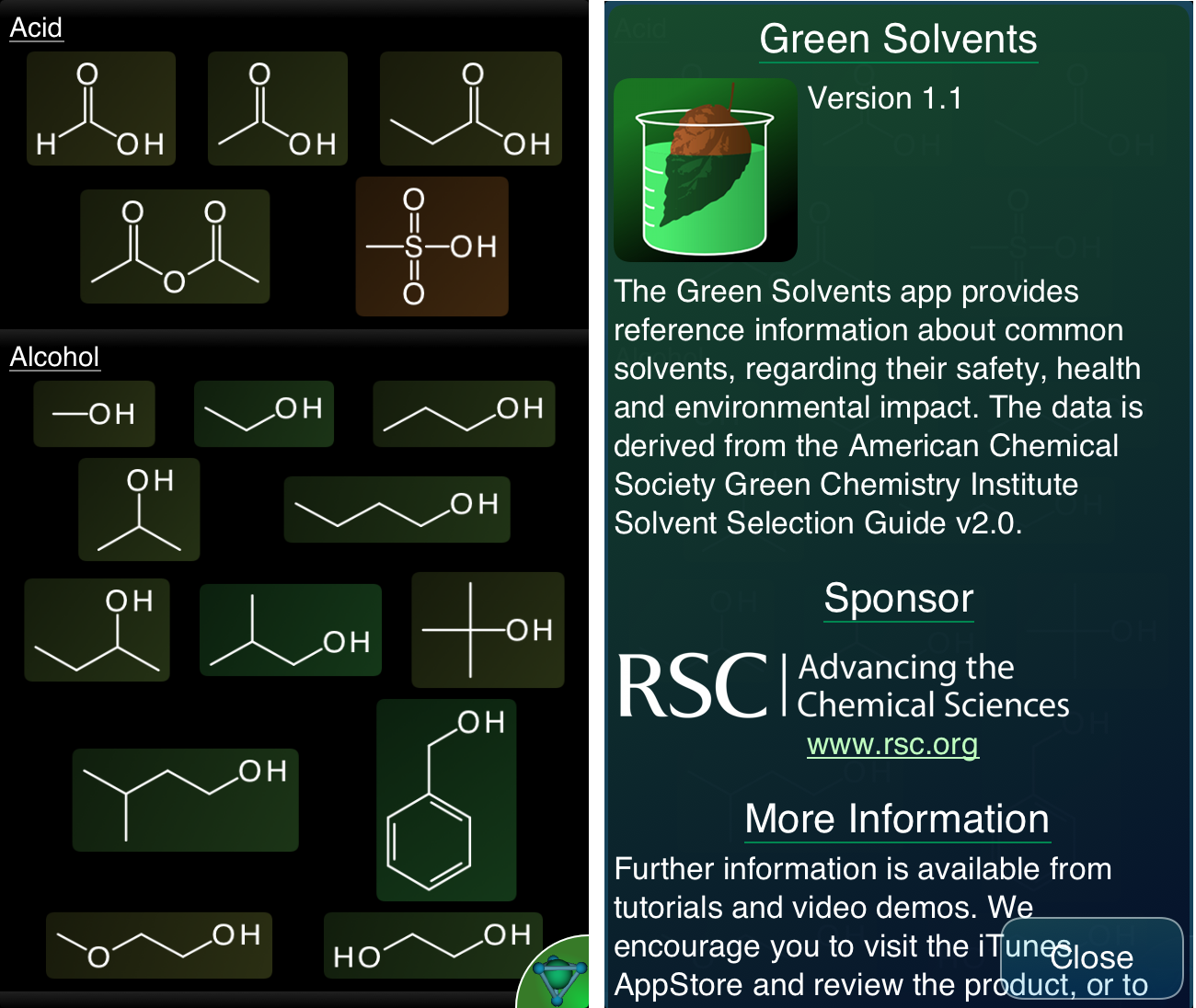
greensolv110The latest version of Green Solvents (1.1) is now available on the AppStore. The first thing you’re likely to notice is that the banner advertising is gone. Take a closer look, and you’ll notice the acknowledgment that the app is now sponsored by the Royal Society of Chemistry. The Green Solvents app has been tied in with ChemSpider references from the outset. Given that the Royal Society of Chemistry owns ChemSpider, has a long standing interest in Green Chemistry, and an increasing role in the burgeoning ecosystem of mobile apps for chemistry, this is a natural progression.

If you have an iPhone, iPod or iPad, check out the Green Solvents app: it’s free, and it couldn’t be any simpler to use. And stay tuned for further announcements, there are more on the way!

Open & green: recent developments

oddt_2013jan2013 has gotten off to a great start in general, but particularly so for two free apps. After we published an article about using apps for green solvent selection in the American Chemical Society’s new green-themed journal, the ACS picked up the news and released it as an entry for their weekly PressPac. We’re very optimistic that this will help get the word out, and if anyone wants more information for a followup article, we’re all over that.

There has also been an increasing amount of interest in the Open Drug Discovery Teams (ODDT) project, and we’ve just added 3 more topics in the last few days, Rare Disease Report, Fibromuscular Dysplasia and iCancer. Continue reading

Structure-property calculation with MMDS

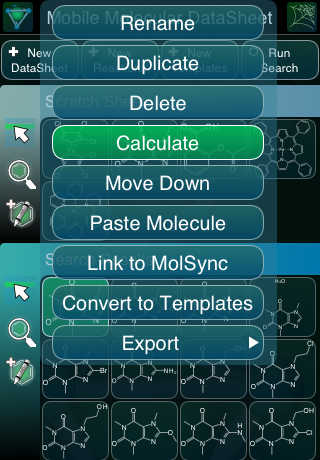
mmds_calcprop1Version 1.4.1 of the Mobile Molecular DataSheet (MMDS) has just been submitted to the iTunes AppStore, and its notable new feature is the ability to select a datasheet and calculate structure-based properties. A new column is created for each selected property, and the calculation feature is applied to each row. The available properties currently include molecular weight/formula, log P, molar refractivity and topological polar surface area. The functionality is provided by the molsync.com webservice. Continue reading

SketchEl gets an update: MDL MOL extensions for zero-order bonds

MainLogoThe open source project SketchEl, hosted by SourceForge, is a cheminformatics-focused structure editor that I wrote back at the dawn of time (also known as the year 2005). The latest version, 1.56, adds in MDL MOL extensions that allow this popular legacy format to be used for reading and writing structures that use zero-order bonds, and non-computable virtual hydrogens, as described in J. Chem. Inf. Model., 51, 3149-3157 (2011). Continue reading