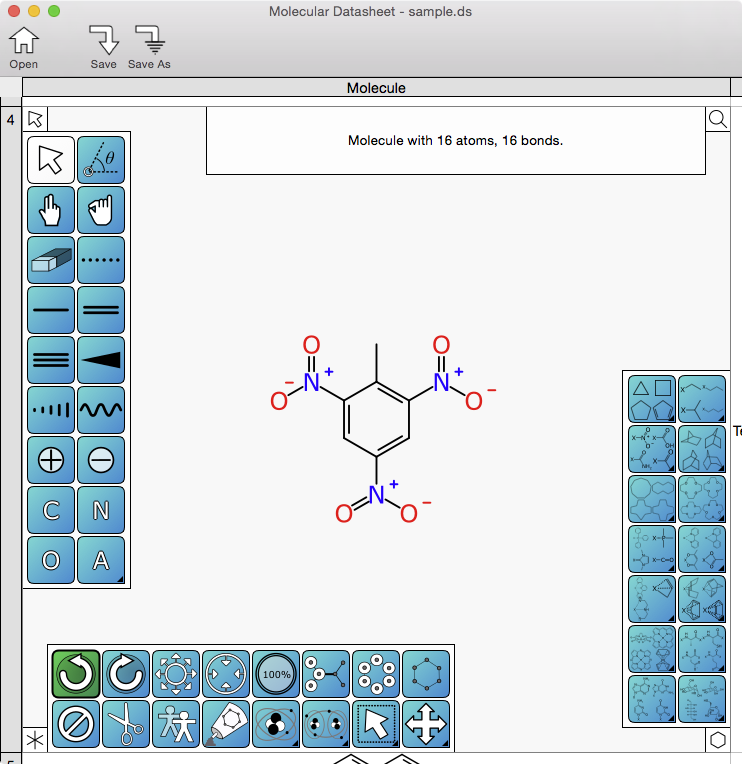
 Since the last sneak preview, the skunkworks project “XMDS” – the Mac OS X desktop version of the Mobile Molecular DataSheet app – has gained enough functionality to make another screenshot, this time showing what the actual molecular drawing interface might look like once it’s done. Continue reading
Mobile Bayesian modelling: importing
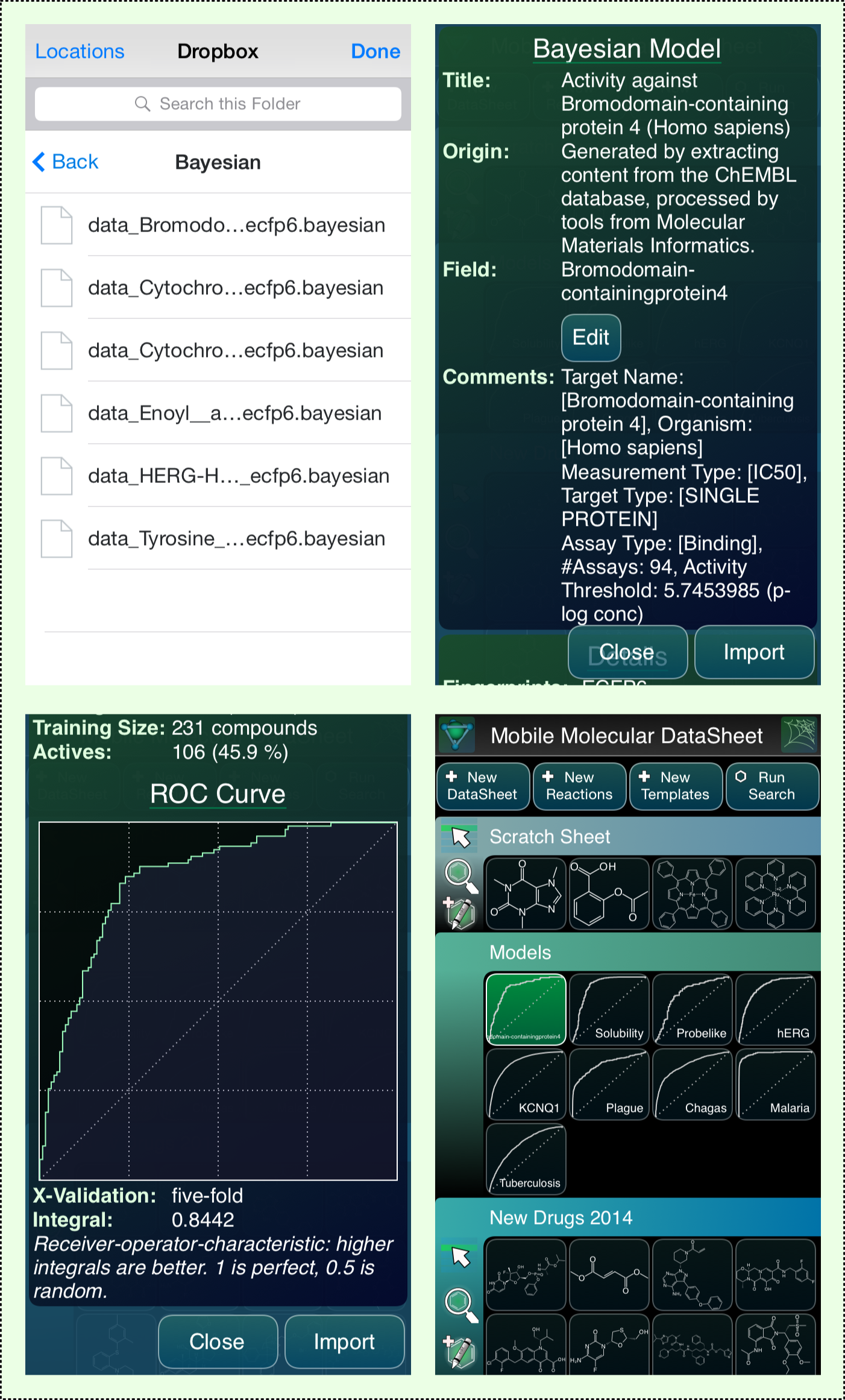 One more key piece is in place for Bayesian modelling with apps: MMDS 1.6.1 just got approved on the AppStore, and brings with it the ability to recognise files with the .bayesian extension (or MIME type chemical/x-bayesian), and import them into the collection of available models that can be used to calculate properties. At the present time the only official way to create such models is to use the bleeding edge build of the Chemical Development Kit and roll your own wrapper code, but we’re working on that!
Recent developments with Bayesian models and app data sharing
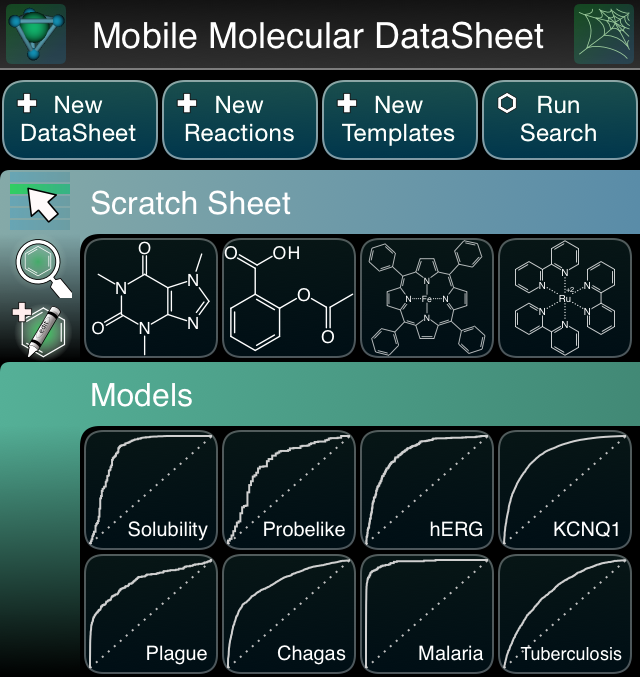 Several of the flagship apps from Molecular Materials Informatics have had major updates recently: the Mobile Molecular DataSheet, SAR Table, MolPrime+, Green Lab Notebook and Approved Drugs. Two separate groups of features have motivated these updates: (1) the inclusion of in-app calculation of nontrivial properties, lately supplemented by the inclusion of Bayesian models, and (2) leveraging the new iOS 8 API feature for importing & exporting data to any compatible service, which includes iCloud by default, but also Dropbox if it is installed. Continue reading
Dabbling with the desktop: molecular datasheet app on the mac
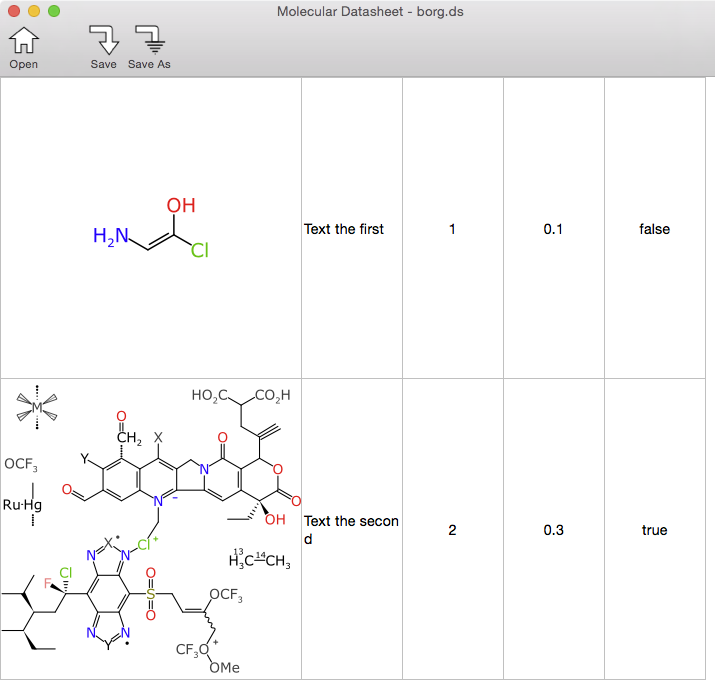 This is a way-too-soon sneak preview of what might someday end up as a commercial product. Currently residing under the project acronym XMDS, it is related to the MMDS app, for Mac OS X (i.e. X-Molecular DataSheet). The minimum viable feature set is intended to be approximately equivalent to the datasheet & molecule editor that is implemented by the open source SketchEl project. Continue reading
Online file sharing with iOS 8: upgrading the Green Lab Notebook app
 Mobile apps for iOS have always been able to share files by a variety of different mechanisms, but many of these were limited in ways that were very detrimental to the user experience. The Green Lab Notebook app is now catching up to the new technology introduced with iOS 8: using the “document picker” interface to import and export files to document providers, which immediately makes it fully interoperable with iCloud, and file sharing services like Dropbox. Continue reading
Structure property calculation in apps: MMDS
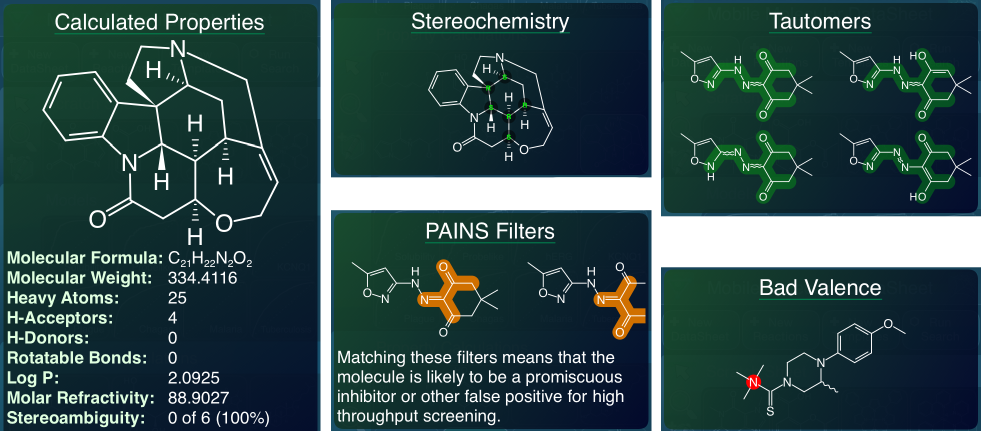 An important milestone in has been reached in the migration of complicated structure-based calculations to pure mobile. The latest version of MMDS (1.5.9) is now available on the AppStore, and allows visualisation of calculated properties for individual molecules, as well as calculating new columns for entire datasheets. Continue reading
PAINS filters now on mobile, with MolPrime+
 One of the trends that you should expect to see more of from apps produced by Molecular Materials Informatics is a shift toward performing more advanced calculations internally on the mobile device, rather than calling out to a cloud service. One of the recent demonstrations was shown with the Approved Drugs app, which can now call up Bayesian models for various predictions. The next version of MolPrime+ that is awaiting review on the AppStore incorporates internal calculation of log P, and also brings the ability to identify PAINS filters for molecular structures.
Incorporating Bayesian models into the Approved Drugs app
 Some interesting experimental features are on their way to the Approved Drugs app, which has been in the crosshairs for expanded functionality recently. The latest round of improvements involves the ability to collect custom-drawn structures, and apply Bayesian models for predicting the presence of “bad drug” properties, both for molecules overall, and for individual atoms. Continue reading
2014 redux
The year of 2014 is almost over, so it’s time to write the summary. The year started by taking a few unexpected turns that I could not have predicted, but things turned out well, and a lot got done. Continue reading
NIH probe molecules in the Approved Drugs app
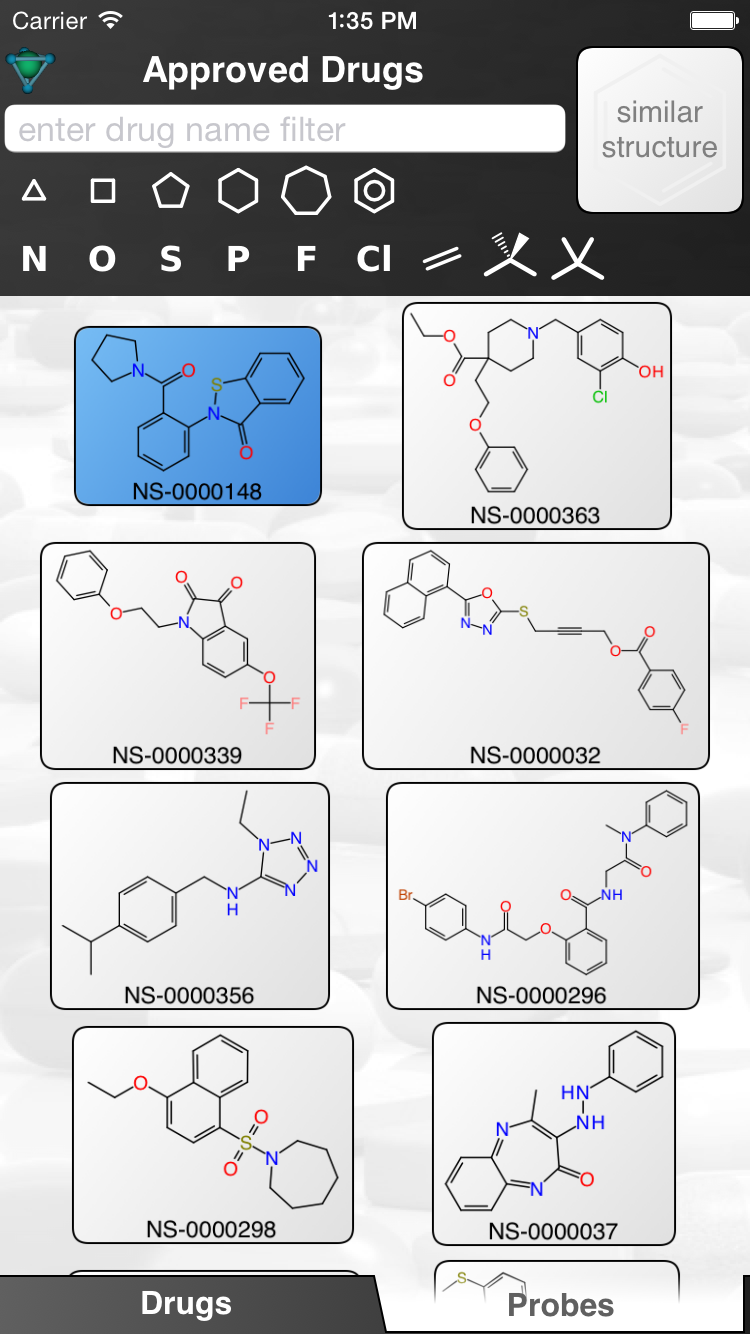 Since the relevant paper just became available (“The parallel worlds of public and commercial bioactive chemistry data”, Lipinski et al, Journal of Medicinal Chemistry), now is as good a time as any to mention that the NIH probe molecules discussed in the article have been incorporated into the latest version of the Approved Drugs app. Continue reading
 Cheminformatics 2.0