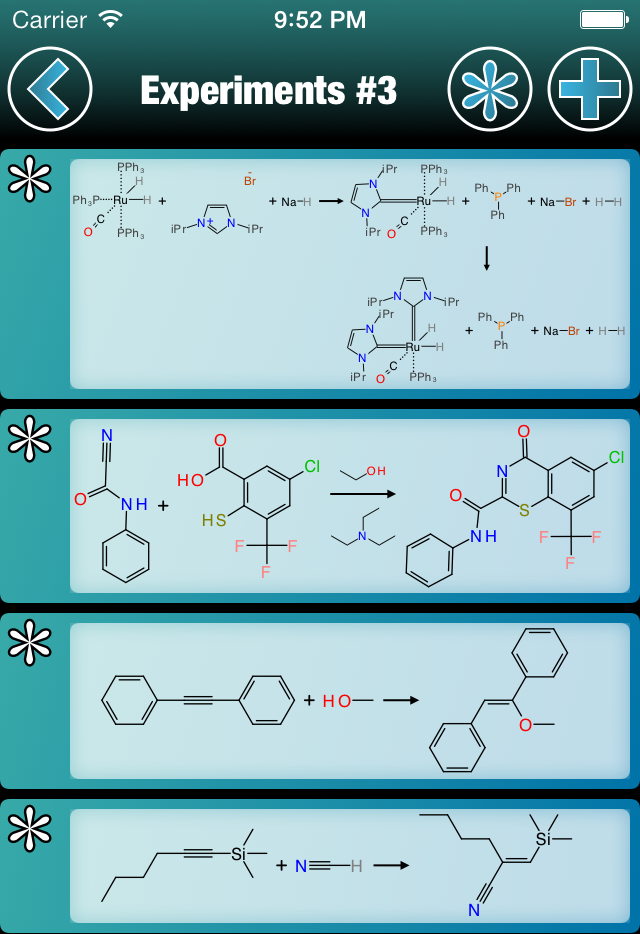
 The previous chemistry-related post described some of the issues involved in representing chemical reactions. The Green Lab Notebook app-in-progress needs to be able to express multistep reactions as a collection of highly marked up molecular components, and it also needs to be able to render them on demand, to a level of quality that is comparable to what a user might draw themselves, if they happened to be in total control over where everything is positioned. Drawing a multistep reaction algorithmically is not an entirely trivial task, though, since there are multiple opportunities for making judgment calls for how best to fit the scheme on a piece of paper to achieve close packing, aesthetic readability, and consistency across a series. Continue reading
My Google Kafka moment / scientific illiteracy of spambots
Like most people in the tech industry, I’ve always liked Google. From the moment I typed my first search query into the no-nonsense search page, they’ve been able to do no wrong: I like everything they do, how they do it, and why they do it. Their services are so reliable and useful it’s very difficult not to think of as being an integral and always-available part of the infrastructure of modern life, like electricity or banks. I do, however, read quite a lot of technology news, and various bloggers and pundits always seem to eventually get to the point where relying on Google burns them – sometimes pretty badly, in the major livelihood compromising sense – and they have to scramble to reorganise.
I got my turn a couple of days ago. Continue reading
Chemical reactions: the format matters (a lot)
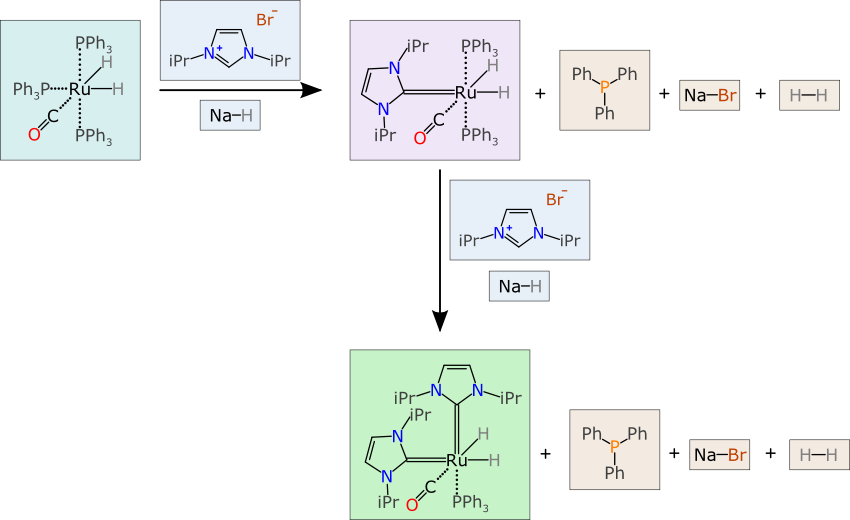 The Green Lab Notebook (GLN) app, mentioned in the previous blog post, makes a strong point of capturing the cheminformatic data of each chemical reaction at the point of entry, i.e. the scientist who currently knows more about that reaction than anyone else in the universe needs to provide that information in a digitally hygienic and lossless form. Continue reading
Winter project: Green Lab Notebook
 The Canadian winter has announced itself, coinciding with American thanksgiving. Apart from a lot more time indoors and a significantly increased consumption of heavy stout ales, it signifies time to hunker down and concentrate on product development for awhile. Continue reading
Dynamic similarity clustering in the Approved Drugs app
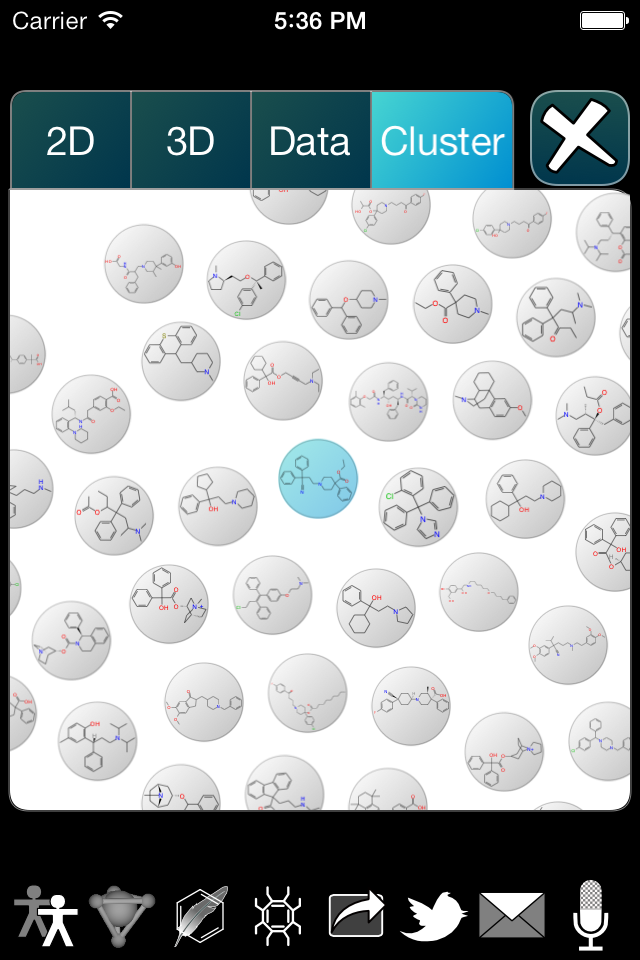 The Approved Drugs app is about to get a new update, which introduces a visual clustering feature. Initially, this is a bit of a novelty, but has a clear pathway toward a more sophisticated, high value offering. Continue reading
Mobile sketcher gets some lovin’
The next version of the Mobile Molecular DataSheet (MMDS) for iOS will come with a few new features for sketching out molecular structures, followed by each of the other apps that are based on the same core technology, as and when they are updated. While the sketcher codebase has been quite stable for awhile, on account of already being powerful enough to draw some very tricky structures perfectly & quickly, the to-do list has been collecting up ideas for improvements. Continue reading
Cheminformatics workflows using the mobile + cloud platform: NETTAB 2013
 Yesterday I returned from a truly delightful trip to Europe, the primary purpose of which was to deliver a presentation to the 2013 NETTAB meeting. The slides are now available on slideshare:
http://www.slideshare.net/aclarkxyz/alex-clark-nettab-2013
For the benefit of the audience at the conference, I wanted to make sure that everyone present could easily access the apps that I was talking about, and so rather than handing out promotional codes on scraps of paper, I decided to simply drop the price of the non-free apps that I described in the presentation to zero for a few days. I didn’t tell anyone else about this, and figured that a few dozen people would accidently get a freebie or two. That’s not quite the way it worked out: in actuality more like a few tens of thousands of people got in while the going was good. Next time I pull a stunt like that, I might just shorten the window of opportunity a little bit, but if anyone out there is reading this, and you made the best of it, please consider popping by the iTunes AppStore and putting in a favourable review and/or rating!
Besides having the opportunity to meet a lot of bioinformaticians and semantic web experts (two adjacent fields that I have not been paying as much attention to as I should have), it certainly didn’t hurt that the conference was held at the Lido of Venice. This being my first time ever to visit any place along the mediterranean, I have to say the location is quite amazing. For a rustic colonial who doesn’t normally bother taking photographs, well lets just say I snapped several hundred of them in the Lido and main city of Venice. It’s one of those places that isn’t overhyped: it really is a must-see.
Nonetheless, there’s now a lot of work to catch up on. My list of cool ideas to try to prioritise was already pretty long, but many brainstorming sessions later, it’s grown a whole lot. So much to do, before or after the next trip, to the 9th German Conference on Cheminformatics.
Tutorial on mobile+cloud workflows: Venice, Italy
In a few days I’m heading out to the Old World, specifically for the purpose of presenting a tutorial about using mobile apps + cloud computing in a cheminformatics workflow. The conference is called Semantic, Social, and Mobile Applications
for Bioinformatics and Biomedical Laboratories, and is hosted by NETTAB (Network Tools and Applications in Biology) and held in Venice, Italy. This will be my first time I’ll see the Mediterranean, so this is all rather exciting!
The source material for my subject is covered in two recent blogs (1 and 2). The presentation is rather long, and based on all new material…
Lyme disease added to ODDT
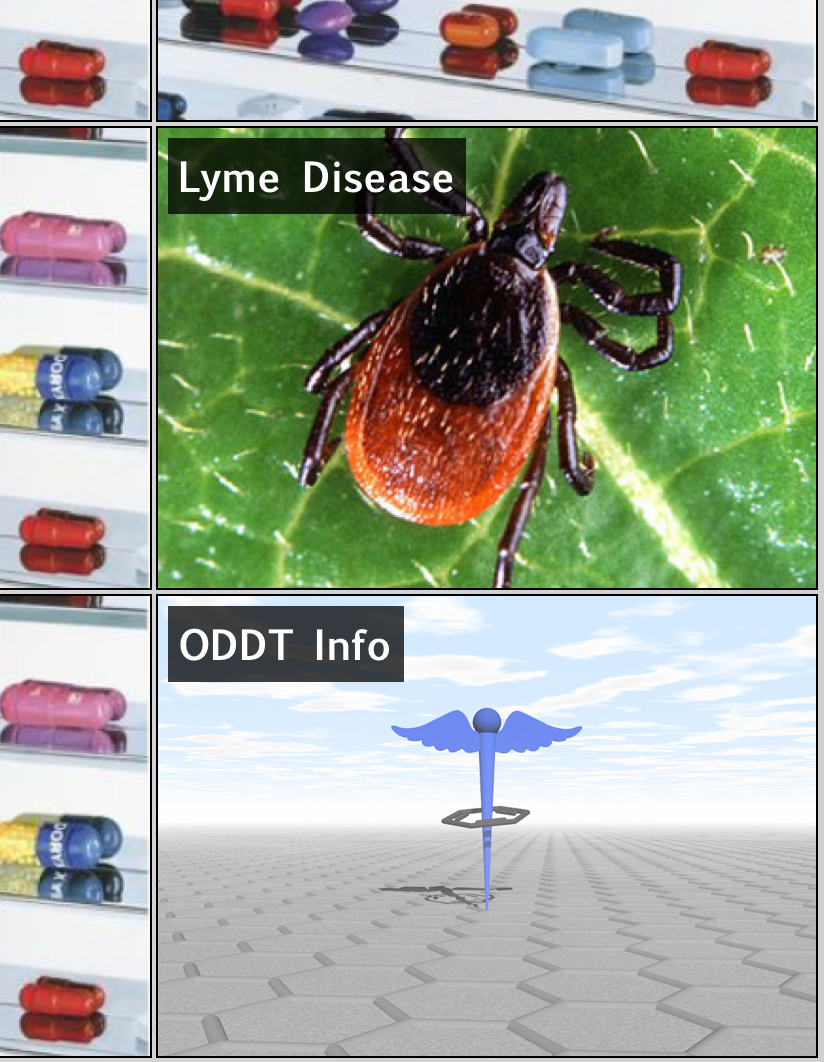 It seemed appropriate to include a new topic to the Open Drug Discovery Teams project: Lyme Disease. After a road trip through New England this summer, seeing signs everywhere warning visitors to be ultra careful not to do anything reckless such as walking anywhere near green foliage, then reading articles about how the disease is actually an underdiagnosed epidemic, it might be time to start thinking of it in the same terms as neglected tropical diseases.
Scaffolding of tuberculosis drugs part 2: adding public data
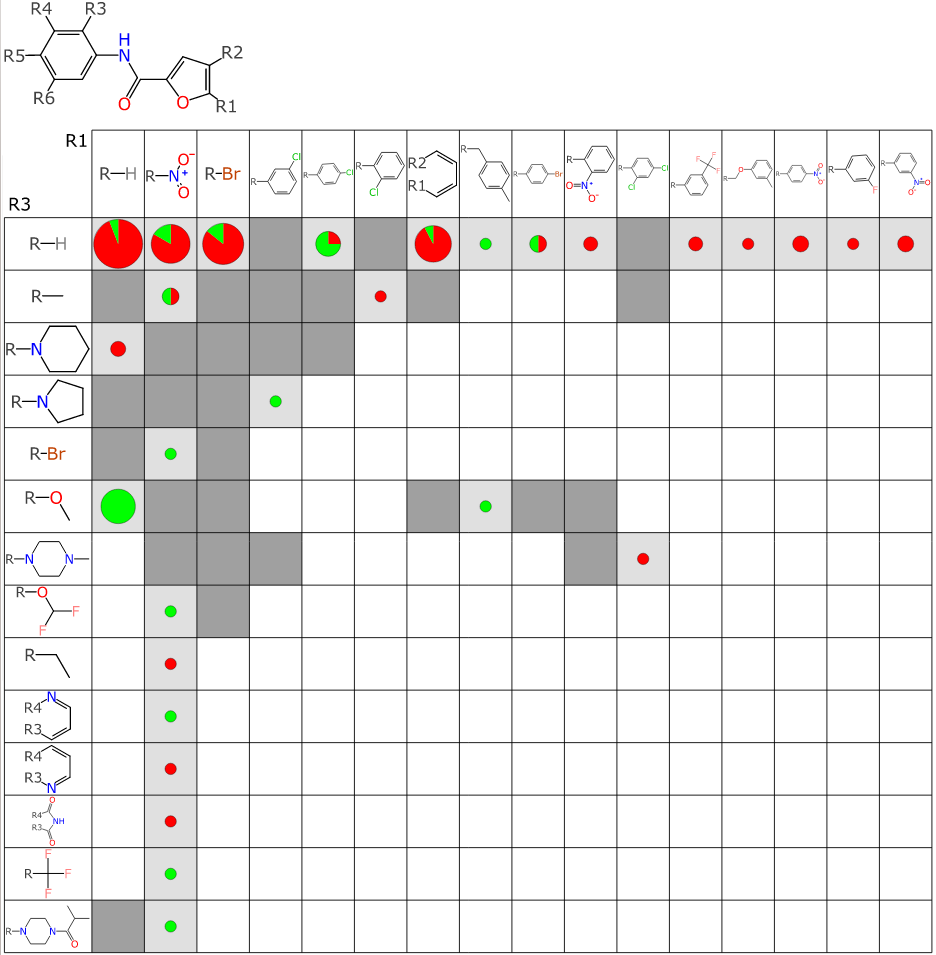 As a continuation of the previous post about generating scaffolding schemes to help search for new tuberculosis drugs, the next step is to pose the question: what about known compounds that fit into the structure-activity scheme, but haven’t been tested for activity against TB? As it happens, this question can be answered by scripting in some preexisting functionality. Continue reading
 Cheminformatics 2.0