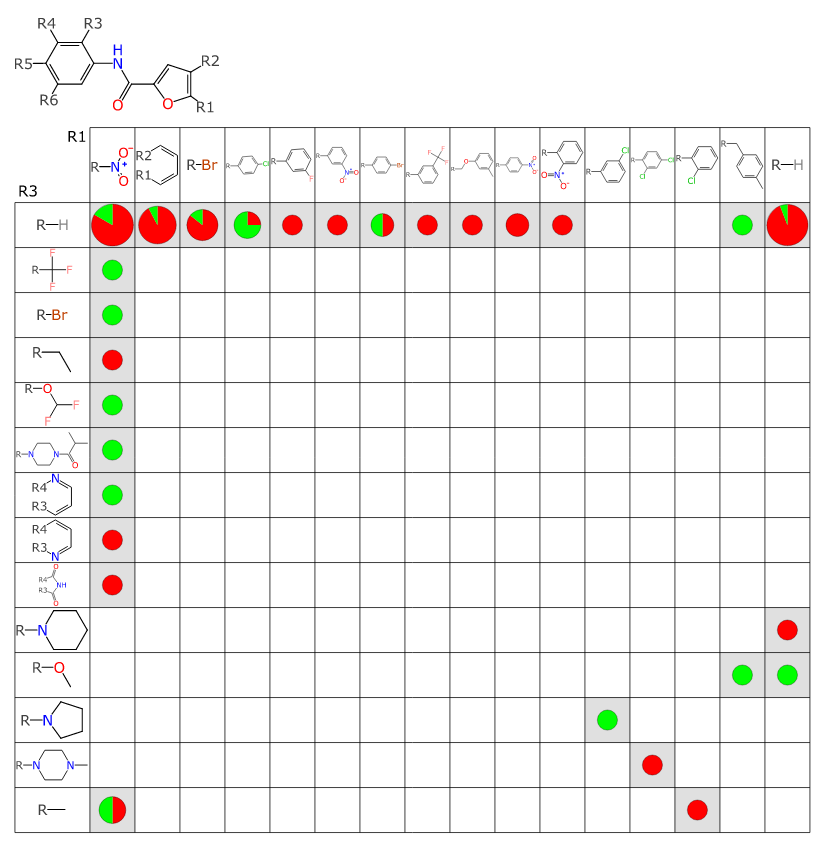
 One of the projects that has been keeping me busy lately is a structure data-mining exercise intended to reveal some interesting scaffold hypotheses that can contribute to research into finding new cures for tuberculosis. The process is at an early stage, but if you’re interested in taking a look at some of the preliminary results, you can view them here. Continue reading
Gordon conference on scientific visualisation in education
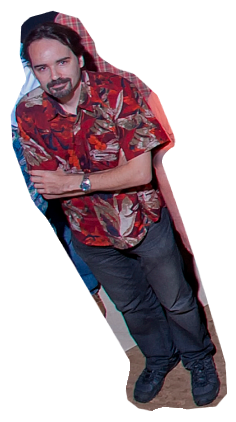 Last week it was my privilege to present a talk at the 2013 Gordon Research Conference on Visualisation in Science and Education. The picture on the right is dissected from the group photo: unfortunately I’m not allowed to post the whole thing, so you’ll have to take my word that there are about a hundred other people standing in rows. Continue reading
SAR Table app gets a better scheme editor
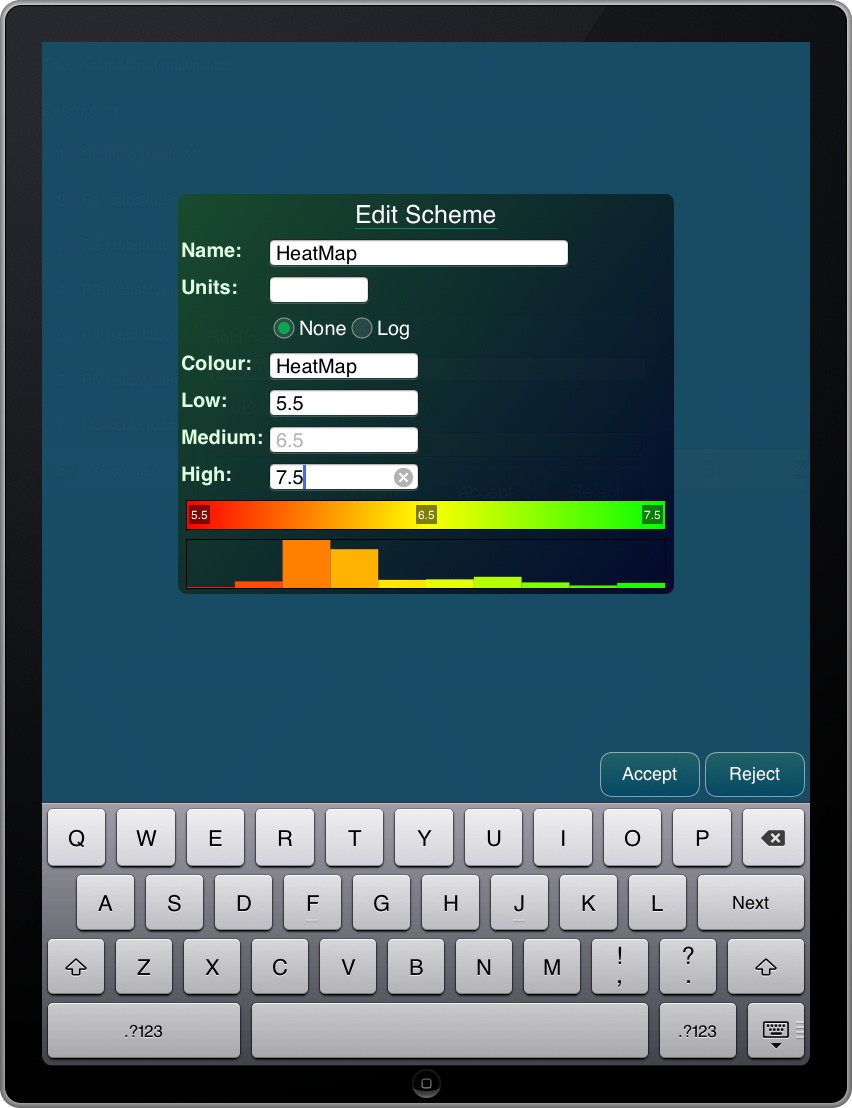 The SAR Table app provides some quite sophisticated property analysis features, which are predicted on the assignment of schemes to property-type fields. This allows not only colour-coding of activities, but it also provides the information that algorithms need to transform the property into a normalised, linear space (e.g. log units for activity values given in concentration). Continue reading
Living Molecules: what’s in a name
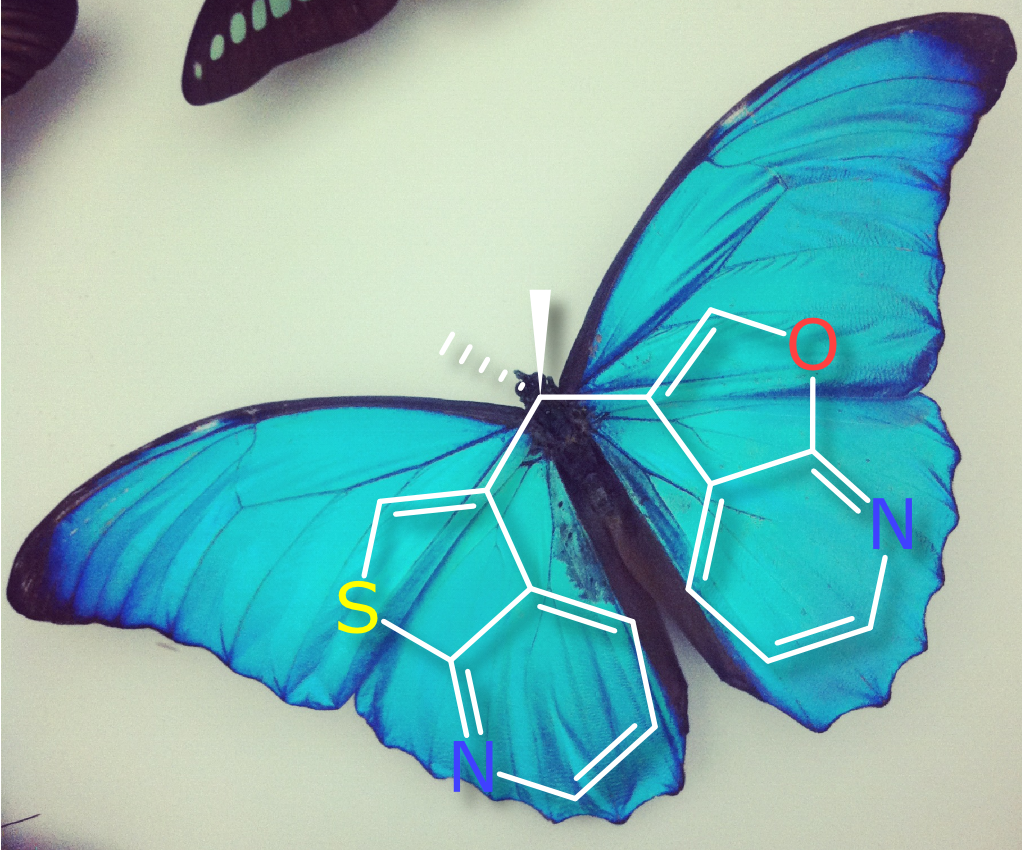 The Living Molecules app has been out for awhile now, and in a few days I’m going to embark on a road trip Rhode Island to participate in a Gordon Conference about visualisation in scientific education. I’ll be bringing with me a poster that describes the virtues of using the Living Molecules app to create molecular glyphs to embed in posters. These glyphs function like QR codes, except that instead of embedding generic data (usually a URL), they encode a way for the reader to lookup chemical data, which can be downloaded and displayed. There’s a reason for the name of the app, other than having a bit of a ring to it. Continue reading
Have you seen this glyph?
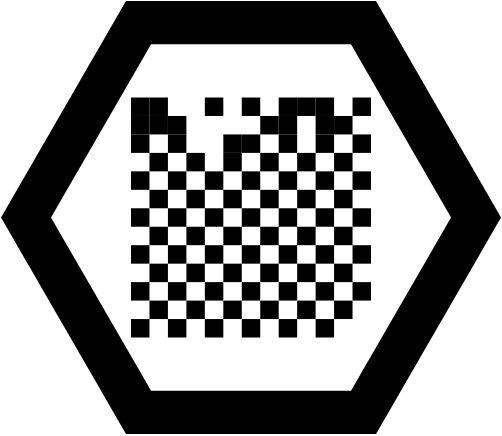 If not, then you need to get out your iPhone/iPad (or borrow someone else’s), make sure you have the Living Molecules app installed, and capture the glyph to find out.
Welcome to the club, ChemDraw Mobile
Yesterday’s buzz in the chemistry software scene revolved around the release of ChemDraw Mobile for iPad (but not iPhone). This is exciting news, even if only for the name: the flagship chemical drawing software from CambridgeSoft has been the go-to brand for creating diagrams for manuscripts for something like a quarter century (give or take). It’s hard to argue that working with chemical structures on mobile devices is an irrelevant hobby when the biggest player in the industry has made the effort to join in, and is giving it top billing with its promotional efforts. Continue reading
Fun with glyph recognition
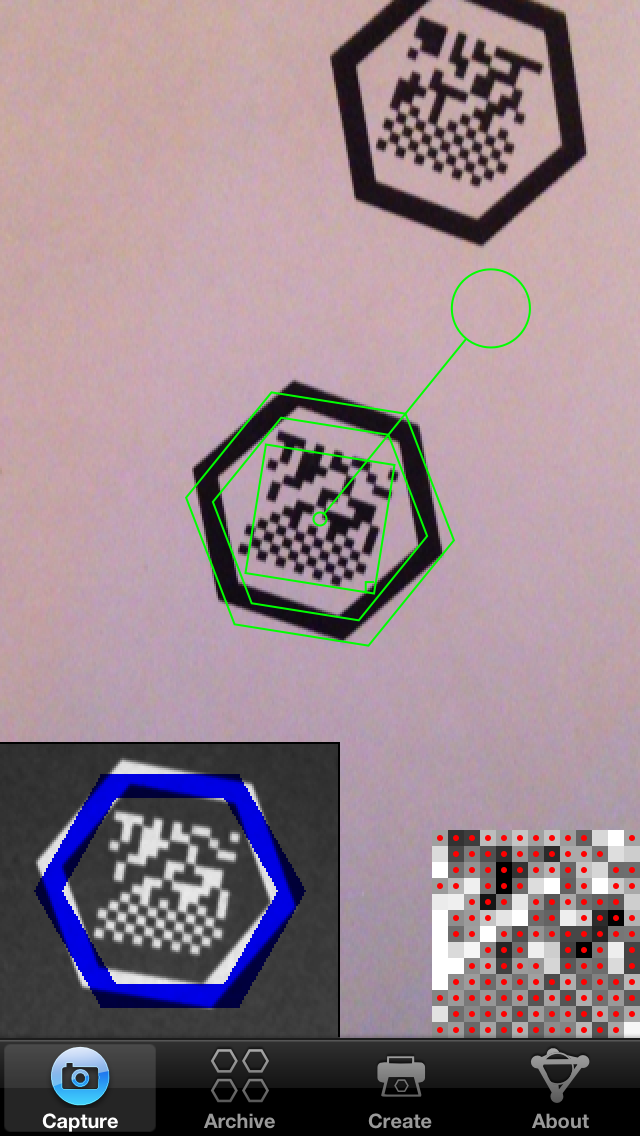 As mentioned in a recent post, the molecular glyph recognition algorithm used by the Living Molecules app is going to have a few more iterations before it’s in peak condition. The current public version (1.0.1) does not behave too well in low lighting conditions, which is not so bad for using with an iPhone, because it comes with its own flashlight, but that’s not the case for iPads. The last couple of days has been spent pulling everything apart and putting it all back together again, because it turns out that distinguishing between white and black is slightly more complicated than one might think. Continue reading
Reaction mapping in MMDS
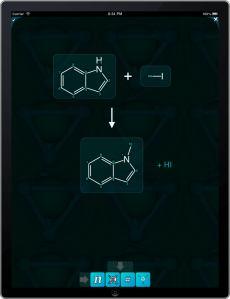 Further to the previous post that mentioned a new atom-mapping interface for the Mobile Molecular DataSheet (MMDS) app, the next step is an atom-to-atom pairing interface for reactions. A very short 30 second YouTube clip will show you how this works. Continue reading
Atom mapping in MMDS
 The next version of the Mobile Molecular DataSheet is going to add a couple of user interface segments for viewing and editing the atom mapping number property. Shown on the right is the menu bank for providing mapping numbers for an individual molecule. Perhaps not so very interesting in and of itself, but the next step is to construct a slightly more intricate user interface for providing atom-to-atom mapping pairs for reactions.
In case you’re wondering, the answer is yes: this is going somewhere specific. Atom-to-atom mapping is a core prerequisite for getting into the world of reaction transforms.
Living Molecules, now with its own illumination
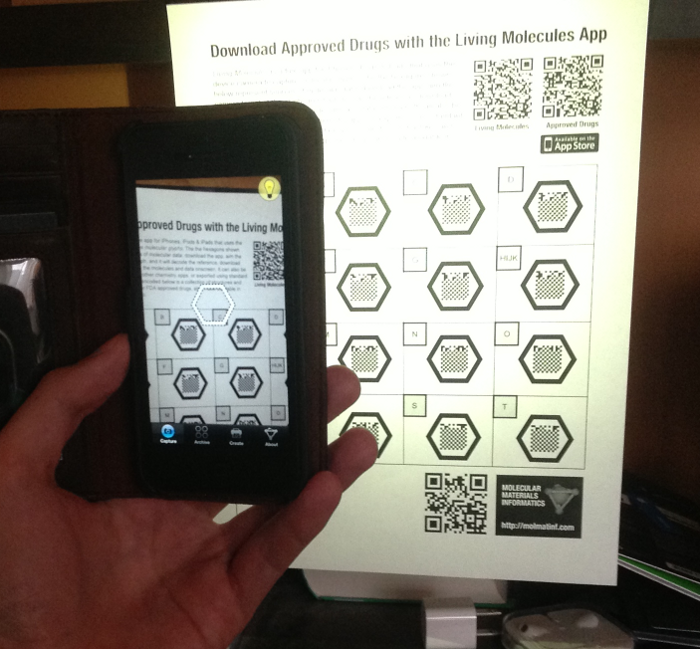 Last week, the Living Molecules app was released on the iTunes AppStore, in its “minimum viable product” form, to use the parlance of our times. To no great surprise, the recognition sequence for taking camera images and applying an algorithmic transform to decode the binary payload was less than perfect in version 1.0, though due to a couple of rookie mistakes on my part, the nature of those imperfections taught me a couple of things that I should have already known. Continue reading
 Cheminformatics 2.0