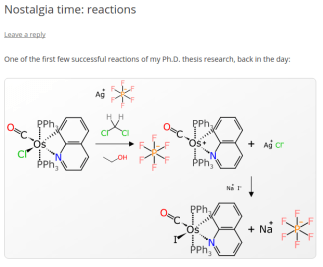
 The last two posts introduced molecules and collections being embedded into a WordPress document. Now the range of datatypes has been extended to include reactions, which can be rendered as schemes – or tabular forms indicating all of the components that go into a multistep reaction, with associated stoichiometry and quantity information. Continue reading
Author: Dr. Alex M. Clark
MolPress: collections of structures & data
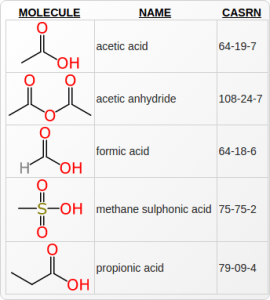 The previous post introduced the insertion of molecules into a WordPress document. Now the plugin goes one further: collections of data – either simple tables of structures, text & numbers, or higher order datasets like scaffold breakdowns – can now be inserted into a blogpost. As with molecular structures, the prevailing philosophy is to have the data encoded in machine readable format and dynamically converted into something visual at the time of presentation. Continue reading
Molecules in WordPress: preliminary experiment
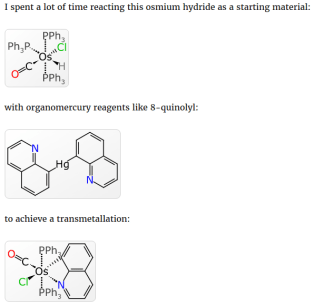 Something I started thinking about recently is the idea of mixing high end cheminformatics tools with generic blogging software, to achieve a reasonable compromise in the electronic lab notebook area. It turns out that writing a WordPress plugin really is as easy as the documentation claims, and hooking it up to my work-in-progress web toolkit is also rather straightforward. Continue reading
BioAssay Express: models mixing assays & compounds
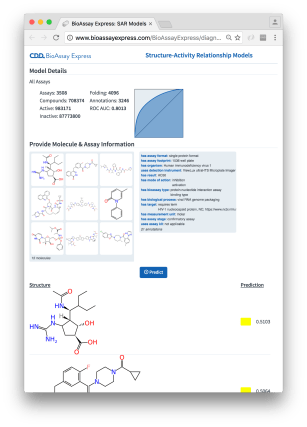 The latest experimental feature of the BioAssay Express project involves taking all of the curated assays (3500 so far) and their corresponding compounds from PubChem (hundreds of thousands of unique structures) and feeding them all into one giant Bayesian model. Rather than the usual approach of modelling compound ⟹ activity separately for each assay, this approach takes advantage of the fact that the semantic annotations that describe the assay can be used like fingerprints. The model is therefore compound + assay ⟹ activity, which means that it is possible to lump together everything that is known about screening compounds against assay protocols. Continue reading
BioAssay Express: selecting molecules & plotting against assays
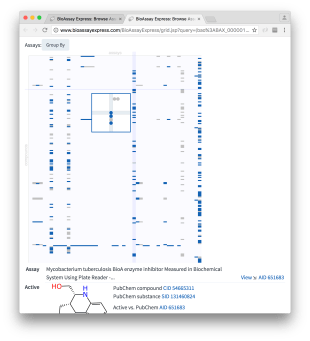 Since the BioAssay Express project added molecules to supplement the annotated assays, we have been able to explore various interesting visualisation techniques. One of the obvious options is to plot a table with assays on one axis and compounds on the other, and look for insights regarding which molecules light up the various different screens. Continue reading
SAR Table app: new life on the desktop
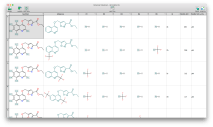 The SAR Table app originally came out in 2011 for iOS, and went from being a tightly focused product to an expansive showcase of cheminformatics technology. In recent years it has not received much attention, due to the fact that having all this functionality on a touchscreen turned out to be pushing further than an iThing is really meant to go. Now the core functionality is being ported to the XMDS desktop app. Continue reading
BioAssay Express: finding assays (and doing stuff with them)
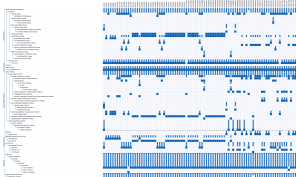 The BioAssay Express project has been moving forward at a solid pace: several important new features have been added or improved for locating assays and inspecting them, with an eye toward performing some sophisticated analysis and model building. This is motivated by the fact that we have curated quite a few assays (~3,500) which is sufficient reason to start putting real effort into figuring out what we can actually do with this high quality professionally annotated data. Continue reading
Green Solvents app: complete facelift
 Way back when, I threw together an app called Green Solvents, which got started anachronistically from a tweet by Sean Ekins (which I misinterpreted, but it got the conversation started, so all is well). Since mid-2011, the app hasn’t had much attention, but that has now changed: it has been rewritten and given a much more modern look. The overhauled version is live on the iTunes AppStore, and is free to anyone with an iThing. Continue reading
BioAssay Express: downloading SAR datasets
 The last post described the addition of molecules to the BioAssay Express project, and alluded to the near term intention of making this actually useful for something. The first round of utility is now in place: the ability to select columns and download the molecules as a single SDfile, suitable for use as a structure-activity dataset. Continue reading
BioAssay Express: now with molecules
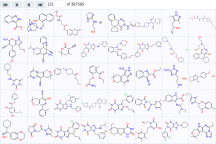 In the previous post, I introduced the BioAssay Express project, which is based on the idea that when assay protocols are described using semantic annotations rather than just scientific text, a whole realm of software analysis becomes possible. Whenever there’s a bioassay experiment protocol at hand, chances are there are also some molecules with activity measurements not far away: which is the subject of this article. Continue reading
 Cheminformatics 2.0