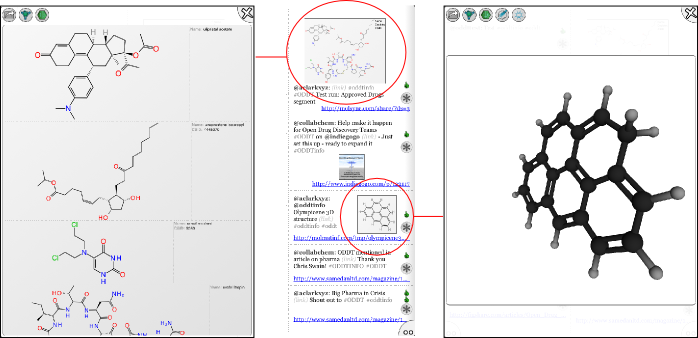
 The Open Drug Discovery Teams app (ODDT for short, or “Oddity” if you prefer) now includes the #RealTimeChem hash tag as its own separate topic. Recently written up C&E News, the chemistry-centric tweetup is going to convene RealTimeChem week, starting 22 April 2013. Continue reading
molsync
MolPrime for Android and sharing on the web
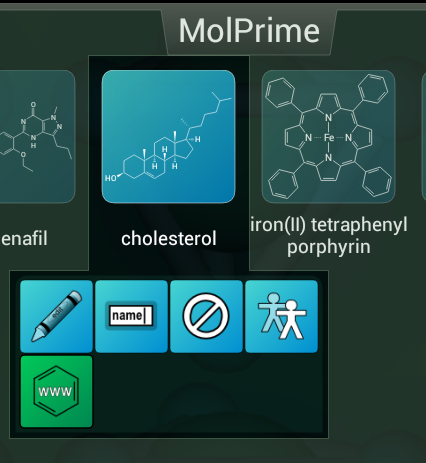 The most recent version version of MolPrime for Android v1.0.3 adds the ability to share structures on the open web. The Android port of MolPrime was originally released as a technology proof of concept, a work in progress to show that the core functionality of chemical structure drawing has been successfully ported to the other popular mobile platform. Now with the ability to share structures, the free app now starts to take on the role of a useful workflow productivity tool. Continue reading
CINF webinar ‘Practical cheminformatics workflows with mobile apps’ now available
Check out the webinar now on YouTube. The talk consists of me doing a brief introduction to mobile chemistry apps, then going through a fictional, yet realistic, workflow example that involves searching for new tuberculosis drug candidates. The workflow includes a tour through several of the apps that I’ve created, or had a hand in creating. But enough spoilers, watch the video whenever you’re ready.
Chemical data hosting on molsync.com
 As a follow on from a recent post, the idea of sharing chemical data by anonymously uploading it to a server, then making it available in value-added ways using a wrapper service, has been embellished. For the last year or so, the molsync.com server, with its all-original cheminformatics software stack, has provided services for various apps from Molecular Materials Informatics, such as rendering content as Microsoft Office formats, parsing ChemDraw CDX files, matching scaffold-substructures to SAR Tables, calculation of physical properties and tautomers, and enabling sharing of data from the Dropbox public folder using the MolSync app.
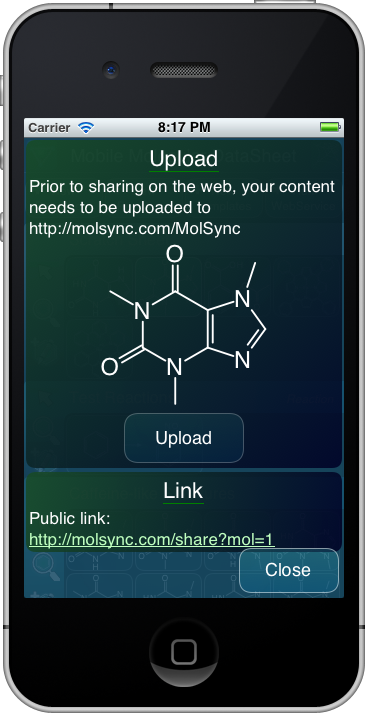
Now it goes one step further: it is possible for the apps to upload chemical documents (molecules, reactions or datasheets) directly to the molsync.com server. The uploads are anonymous and public, and are stored in a database on the server. On successful upload, they can be accessed via the returned ID number. For example, check out:
MolSync v1.2 adds iCloud support
 MolSync v1.2 has just been submitted to the AppStore, and with any luck will pass through the review process in a week or so. The new version adds another repository type: iCloud. In prior versions, the app supported only Dropbox, but has always been intended to support a variety of services. Continue reading
Super Friday app update, and a positive Apple experience
Most of the apps from Molecular Materials Informatics have been updated recently, due to the iPad3: the retina-class screen has half again as many pixels as a 1080p monitor (i.e. a lot), and the performance profiles of some graphics operations have changed. A few things that were fast became slow, and so a few tweaks were necessary. A whole lot of apps got reviewed and passed in quick succession: MolPrime+, MMDS, MolSync, ODDT and ChemSpider Mobile. Others will follow soon.
ACS Talk: Building a mobile app ecosystem for chemistry collaboration
The slides for my recent presentation at the American Chemical Society meeting in San Diego (Spring 2012):
The slides cover a whirlwind tour through some of the apps produced by Molecular Materials Informatics, showing how they can be used together in a realistic chemical information workflow.
Dipping into ADME properties: log P and molar refractivity
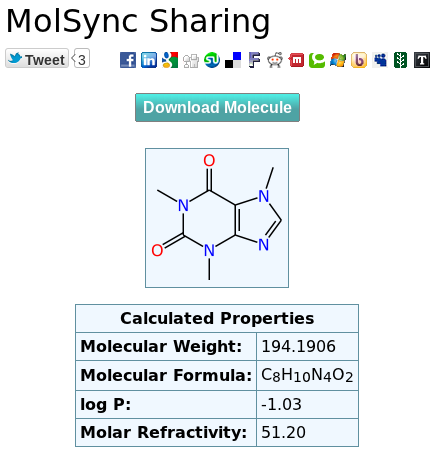
New functionality is being rolled out to the molsync.com server: a new implementation of log P and molar refractivity calculations, two important ADME properties. The functionality is currently available on the web-based interface:
SAR Table app: now with scaffold substructure searching
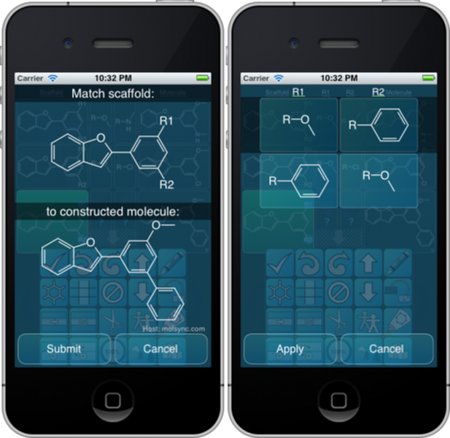
Version 1.1 of the SAR Table app just passed review and is available on the iTunes AppStore. This release is an important one, because it adds a major new feature: scaffold matching. For a row which has a whole molecule defined, and a scaffold core, the scaffold matching algorithm can be invoked to figure out the substituents:
2011 redux
2011 has been a busy year for Molecular Materials Informatics, with new products, new features and new developments coming on hard and fast. 2012 begins tomorrow, and promises to keep up the same breakneck pace. This post is an executive summary of some of the news that was released over the year. Leaving out of course some of the projects that have yet to be unveiled.
At the beginning of 2011, there were just two products, with the same name: the Mobile Molecular DataSheet, or MMDS for short. Due to the rapidly shifting fortunes of mobile device platform makers, the iOS version for iPhone, iPod and iPad took centre stage in 2011, leaving the BlackBerry version behind. The iOS version was mostly feature complete by the beginning of 2011, having already added webservices access and reaction editing. Throughout 2011 the product has steadily matured, with a regimen of software updates adding minor and not-so-minor features, enhancements, bug fixes and ergonomic improvements.
 Cheminformatics 2.0