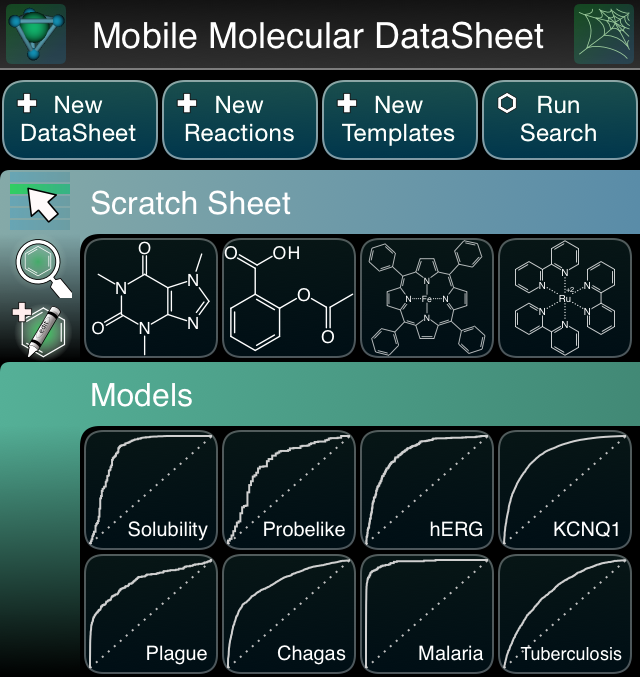
 Several of the flagship apps from Molecular Materials Informatics have had major updates recently: the Mobile Molecular DataSheet, SAR Table, MolPrime+, Green Lab Notebook and Approved Drugs. Two separate groups of features have motivated these updates: (1) the inclusion of in-app calculation of nontrivial properties, lately supplemented by the inclusion of Bayesian models, and (2) leveraging the new iOS 8 API feature for importing & exporting data to any compatible service, which includes iCloud by default, but also Dropbox if it is installed. Continue reading
SAR table
What to expect from me at the Dallas ACS 2014
 Like many (or most) chemists in North America, the twice annual American Chemical Society (ACS) mega-meeting is an important calendar event in spring & autumn. Its primary value proposition is networking, but it also provides an important source of stretch goals. I’ll be presenting two talks, one on Monday about electronic lab notebooks, and the other on Tuesday, about cloud computing. Continue reading
Cheminformatics workflows using the mobile + cloud platform: NETTAB 2013
 Yesterday I returned from a truly delightful trip to Europe, the primary purpose of which was to deliver a presentation to the 2013 NETTAB meeting. The slides are now available on slideshare:
http://www.slideshare.net/aclarkxyz/alex-clark-nettab-2013
For the benefit of the audience at the conference, I wanted to make sure that everyone present could easily access the apps that I was talking about, and so rather than handing out promotional codes on scraps of paper, I decided to simply drop the price of the non-free apps that I described in the presentation to zero for a few days. I didn’t tell anyone else about this, and figured that a few dozen people would accidently get a freebie or two. That’s not quite the way it worked out: in actuality more like a few tens of thousands of people got in while the going was good. Next time I pull a stunt like that, I might just shorten the window of opportunity a little bit, but if anyone out there is reading this, and you made the best of it, please consider popping by the iTunes AppStore and putting in a favourable review and/or rating!
Besides having the opportunity to meet a lot of bioinformaticians and semantic web experts (two adjacent fields that I have not been paying as much attention to as I should have), it certainly didn’t hurt that the conference was held at the Lido of Venice. This being my first time ever to visit any place along the mediterranean, I have to say the location is quite amazing. For a rustic colonial who doesn’t normally bother taking photographs, well lets just say I snapped several hundred of them in the Lido and main city of Venice. It’s one of those places that isn’t overhyped: it really is a must-see.
Nonetheless, there’s now a lot of work to catch up on. My list of cool ideas to try to prioritise was already pretty long, but many brainstorming sessions later, it’s grown a whole lot. So much to do, before or after the next trip, to the 9th German Conference on Cheminformatics.
Scaffolding of tuberculosis drugs part 2: adding public data
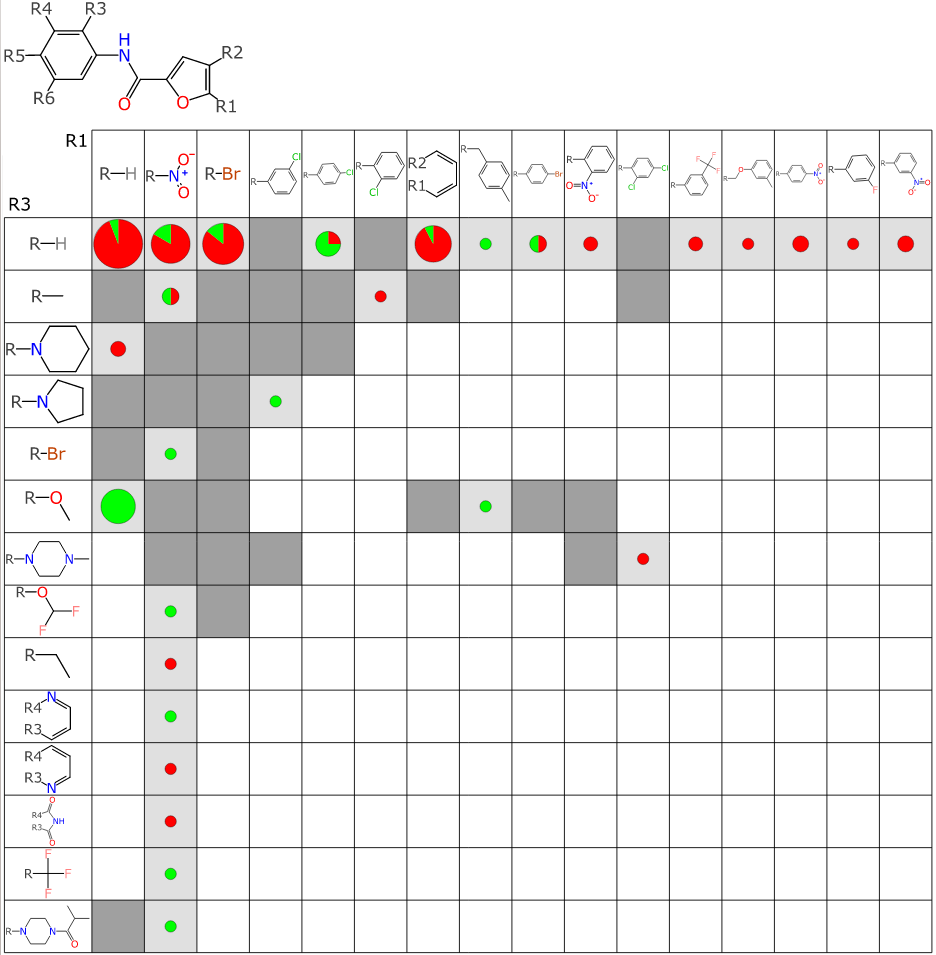 As a continuation of the previous post about generating scaffolding schemes to help search for new tuberculosis drugs, the next step is to pose the question: what about known compounds that fit into the structure-activity scheme, but haven’t been tested for activity against TB? As it happens, this question can be answered by scripting in some preexisting functionality. Continue reading
ChemSpider now integrated into searching with MMDS
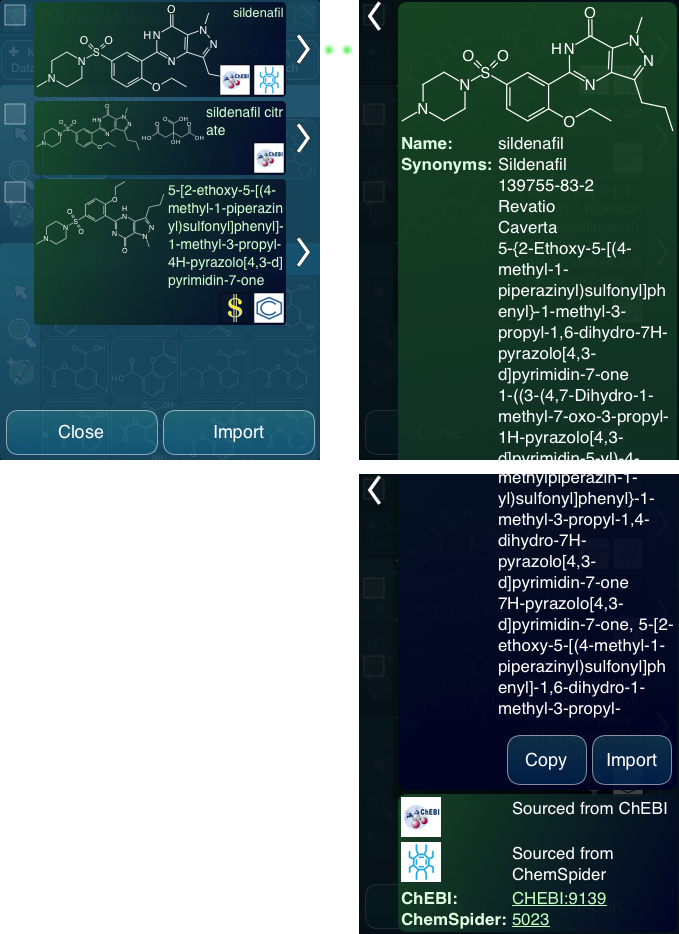 As of now, searches initiated from the Mobile Molecular DataSheet (MMDS), MolPrime+ or SAR Table include results obtained by searching the ChemSpider database, as well as ChEBI and PubChem. The results from these three public chemical database search engines are combined together into a composite result, which is ready for consumption by the mobile app. Continue reading
Searching public databases from mobile apps: better feedback
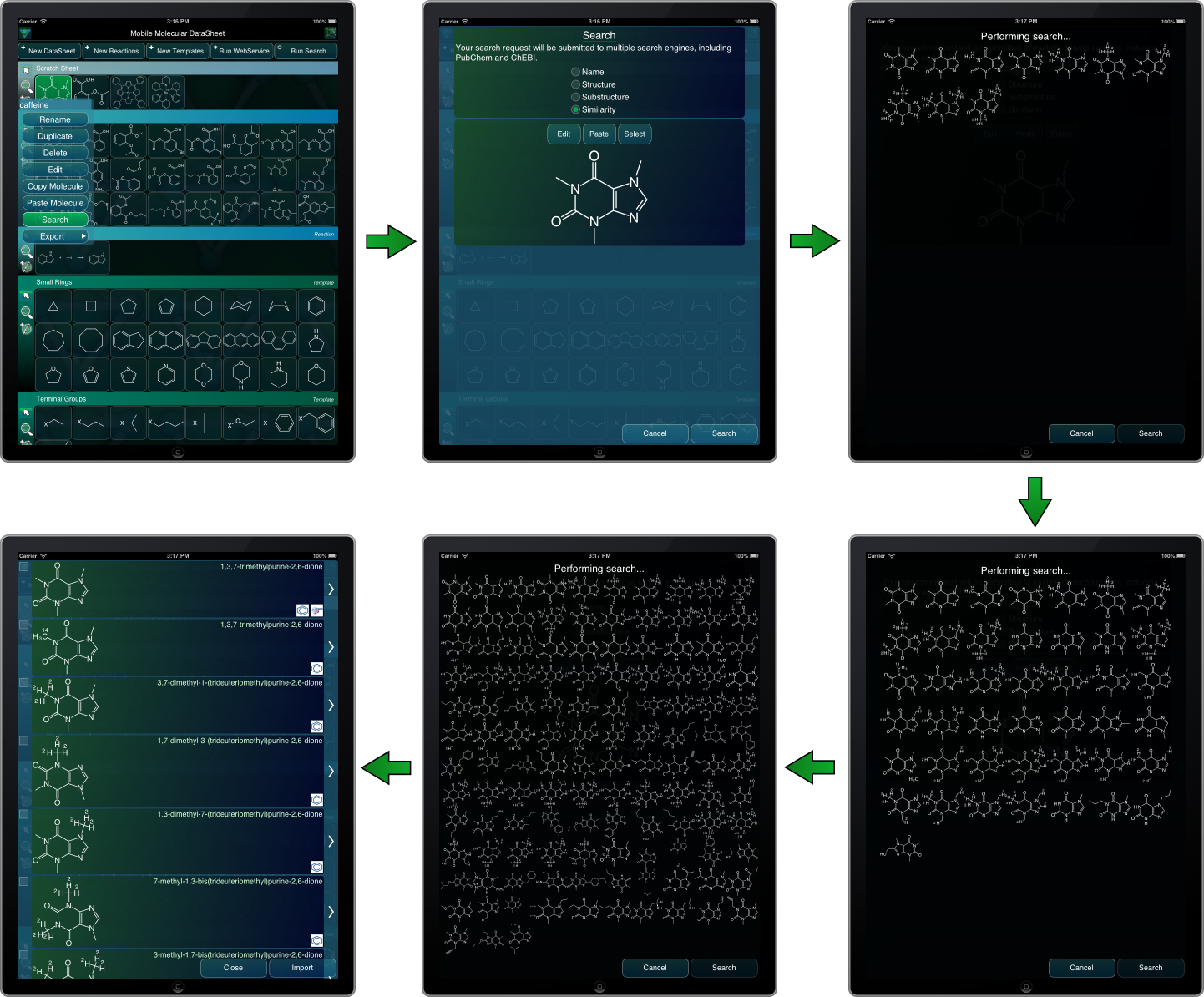 A few iterations ago, some of the flagship mobile apps from Molecular Materials Informatics (namely the Mobile Molecular DataSheet, SAR Table and MolPrime+) added an integrated feature for searching public databases by name and structure. The feature works through a webservice meta-layer that currently wraps PubChem and ChEBI.
The use case is very convenient, but one of the downsides for the presently available features is that the webservice connection is carried out as a single operation, with no feedback until the search is complete. From a user experience point of view, an operation with no progress indicator gives the impression of taking about 10x as long as one that provides useful feedback. Continue reading
Matching multiple scaffolds at once with the SAR Table app
 The SAR Table app has had the ability to match scaffolds to molecules for awhile now, but as of the latest release (1.3.4) just submitted to the AppStore, it will be able to match more than one scaffold at once. Continue reading
Printing the matrix view from SAR Table
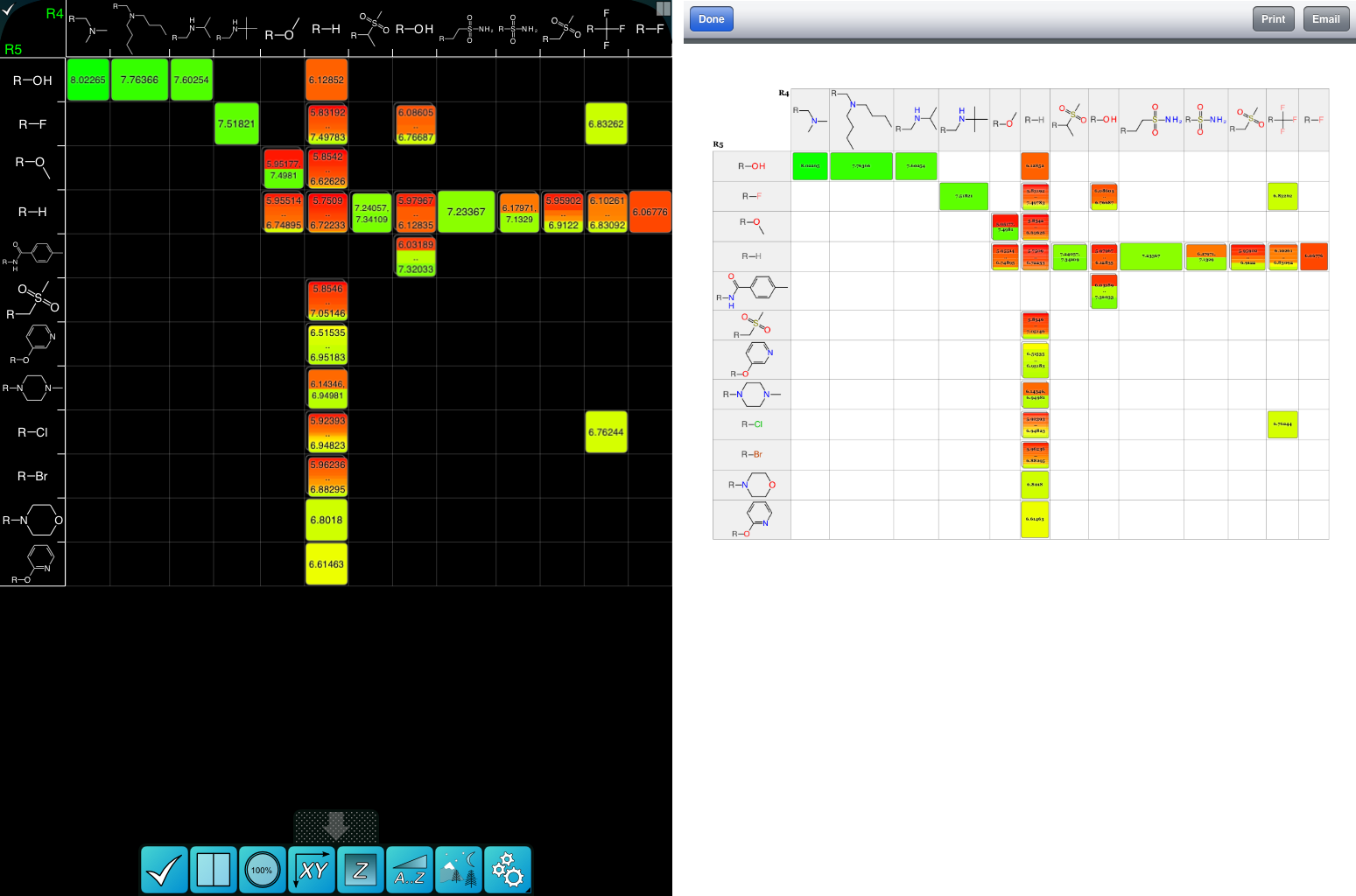 In an upcoming version of the SAR Table app, it will be possible to export the matrix view, as shown on the device, as a printable PDF file. The document can be printed directly from your iThing, or sent as an email attachment. Continue reading
SAR Table prediction of empty matrix cells
 The next version of the SAR Table app is going to be accompanied by quite a few enhancements, one of them being the ability to use a previously built model to come up with predictions for empty cells in the matrix view. Continue reading
SAR Table: colour coded activities for lookups
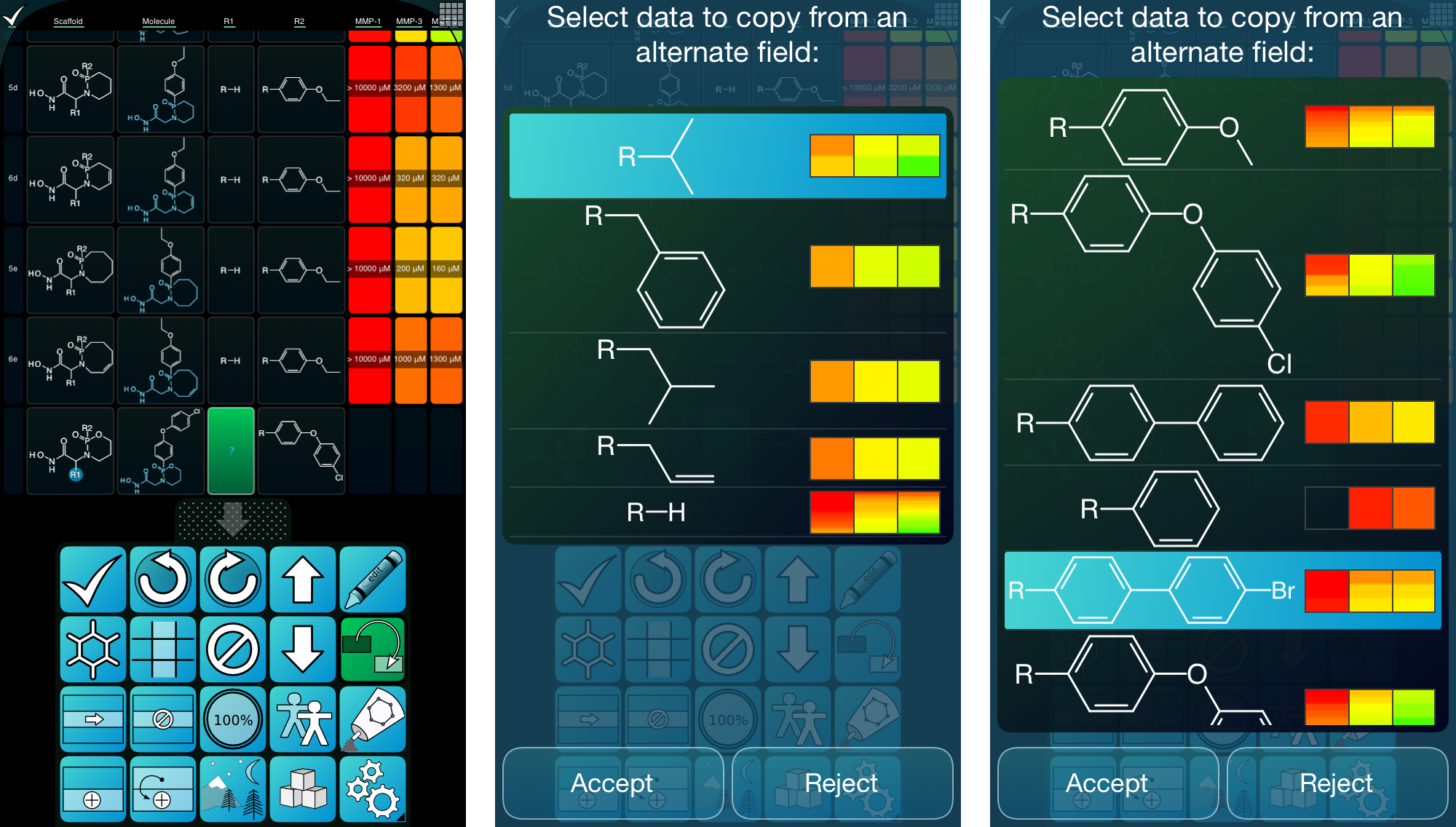 The SAR Table app is undergoing a number of enhancements to make it more suited for planning new compounds based on existing structure-activity relationships. A lot of this has to do with property prediction, model building and scaffold searching of public databases. One of the features slated for the next update is a bit more down to earth: presenting a indication of activities when selecting scaffolds or substituents for reuse. Continue reading
 Cheminformatics 2.0